
6 Animals That Play Dead to Stay Alive
When it comes to survival in the wild, nature has a few clever tricks up its sleeve. One of the most surprising? Playing dead. Known as thanatosis, this behavior allows animals to appear lifeless—sometimes even emitting the stench of decay—to avoid predators or, in some cases, lure in prey.
Here are six fascinating animals that have mastered the art of faking their own death.
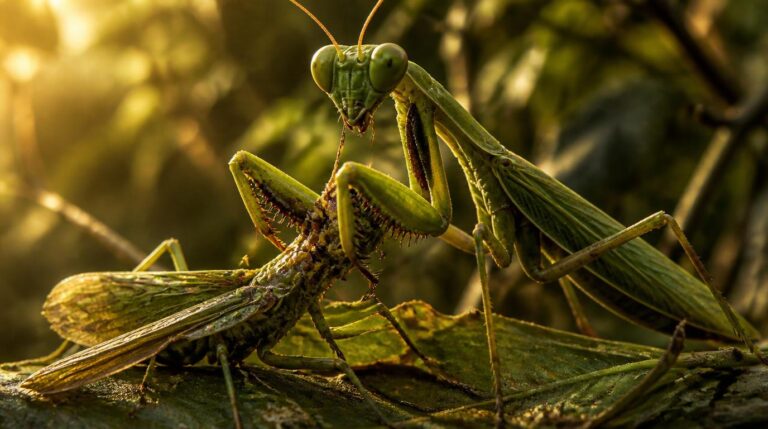
Praying Mantis (Gyromantis kraussii)
These stealthy insects rely on camouflage and cunning to avoid becoming lunch. When hiding fails, Gyromantis kraussii mantises have a dramatic backup plan—they drop to the ground, land among dead leaves, and go completely still, pretending to be dead.
They’re so convincing that even if you poke them, they won’t move. Their coloring helps seal the illusion, blending them seamlessly into their surroundings. For predators, the lifeless, leaf-like insect just isn’t worth the effort.
Ducks
Yes, some ducks have been known to “play dead” when faced with inescapable danger. This behavior, called tonic immobility, is a form of involuntary paralysis that’s thought to be a defense mechanism.
When triggered, the duck goes rigid, its head stretched out, eyes open, wings tight against its body—perfectly mimicking death. Unfortunately, this strategy doesn’t often fool predators, who tend to eat the poor duck anyway. It’s a desperate move, but sometimes the only option left.
Eastern Hognose Snake
If there were an award for most theatrical performance in the animal kingdom, the eastern hognose snake would win it hands down.
When threatened, this snake flips onto its back, opens its mouth wide, sticks out its tongue, and writhes as if dying a painful death. To add to the act, it may even emit a foul-smelling musk to mimic the scent of decay.
Why bother? Because predators often avoid eating animals that appear sick, poisoned, or already rotting. In this case, a dramatic death scene might just save the snake’s life.
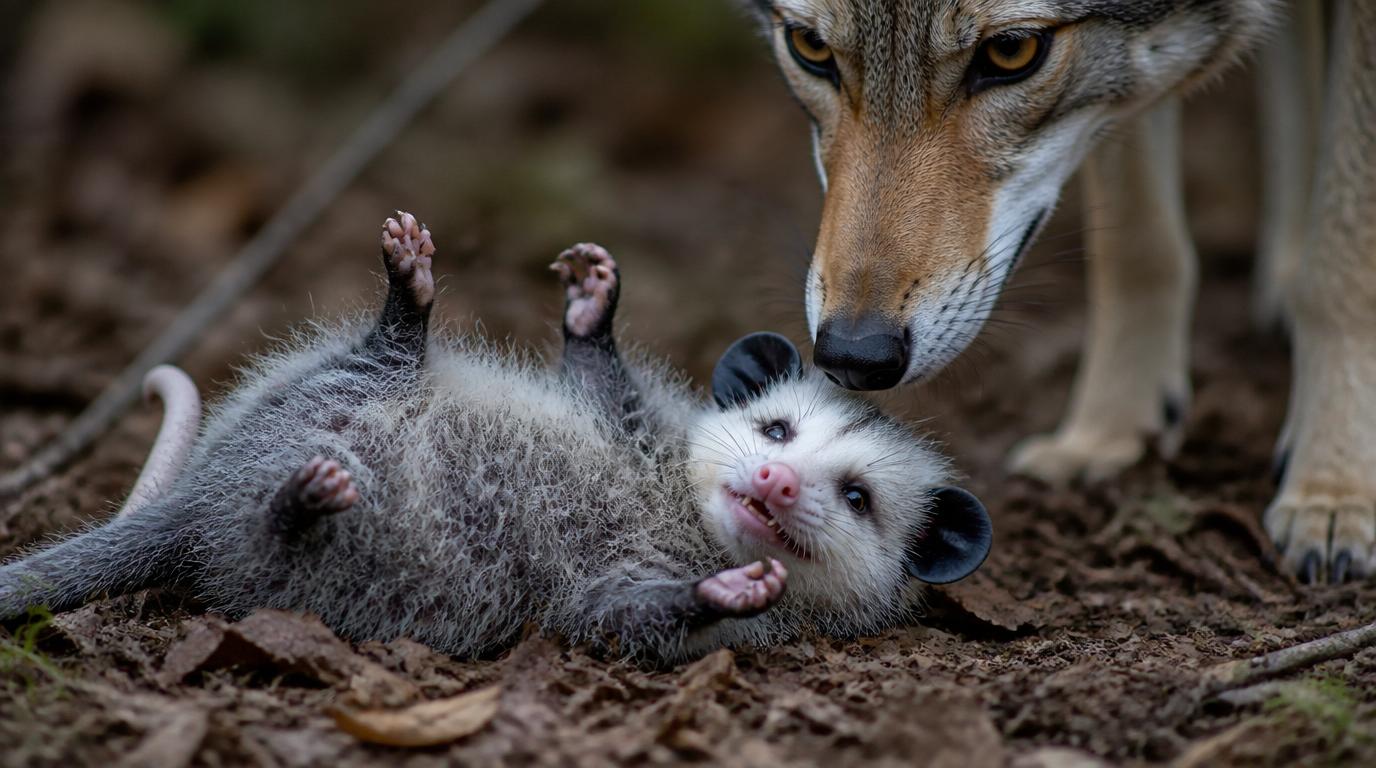
Opossums
Opossums are famously non-confrontational and would much rather play dead than pick a fight. This behavior is so common it’s even given rise to the phrase “playing possum.”
When they sense extreme danger, opossums enter a shock-induced state that can last from 40 minutes to several hours. Their bodies go limp, their mouths foam, their paws curl up, and a smell of rotting flesh may even be released from scent glands.
To a predator, the opossum looks and smells like something long gone—and hardly appetizing.
Red Imported Fire Ant
Fire ants are aggressive, so it may come as a surprise that some of them resort to playing dead. But here’s the twist: it’s only the young ones.
Juvenile fire ants don’t yet have fully developed stingers or protective exoskeletons, making them vulnerable in battles—especially with rival colonies. Their solution? Freeze and fake death. This strategy can help them avoid attacks until they’re older and better equipped to fight back.
Sleeper Goby Fish
Most animals fake death to escape predators. But sleeper gobies turn the trick on its head—they pretend to be dead to catch their prey.
These fish lie motionless at the bottom of their habitat, looking like lifeless carcasses. Curious scavengers approach, thinking they’ve found an easy meal. But when the time is right, the “corpse” springs to life and snaps up the unsuspecting snack. It’s a deadly bait-and-switch that works surprisingly well.
Helpful Resources to Learn More About Animal Survival
If you’re fascinated by how animals adapt to extreme situations, these educational books and guides offer deeper insight into animal behavior, anatomy, and survival strategies:
• National Geographic Animal Encyclopedia — explore remarkable animal adaptations
• Inside the Secret World of Animals — understand how animals survive harsh conditions
• Animal Anatomy Coloring Book — visual learning for curious minds
• Wildlife of the World (National Geographic) — a comprehensive wildlife reference
(Insert your Amazon affiliate links here)
Final Thoughts
From the forest floor to the riverbed, these animals prove that sometimes, playing dead is the smartest way to stay alive—or get dinner. Nature never ceases to amaze with its blend of instinct, illusion, and survival strategy.
Have a favorite animal that fakes its own death? Let us know in the comments!
Simply want to say your article is as surprising.
The clearness in your post is simply spectacular and i could
assume you’re an expert on this subject. Fine with your
permission allow me to grab your feed to keep updated
with forthcoming post. Thanks a million and please continue
the gratifying work.