
Unusual Beauty Traditions: 8 Tribes With Striking and Surprising Aesthetic Ideals
Beauty is a universal concept—but the way different cultures define it can be astonishing. Around the world, many Indigenous tribes embrace traditions that may seem unusual or even shocking to outsiders. These customs are deeply rooted in history, identity, and cultural meaning.
Here are 8 tribes with some of the most distinctive and extraordinary beauty standards on Earth.

Afar Tribe (Ethiopia) — Sharpened Teeth
Among Ethiopia’s many fascinating ethnic groups, the Afar are especially known for a beauty ritual that involves sharpening the teeth of young women. When a girl reaches puberty, her front teeth are filed into sharp, triangular points—a painful rite of passage believed to enhance her attractiveness.
The Afar live a nomadic lifestyle along the Red Sea coast, moving frequently with their livestock. Their portable homes, crafted from lightweight materials, reflect their constant movement in search of pastureland. While pastoralism remains central to Afar identity, many have gradually transitioned toward farming and trade as grazing lands shrink.

Apatani (India) — Nose Plugs and Facial Tattoos
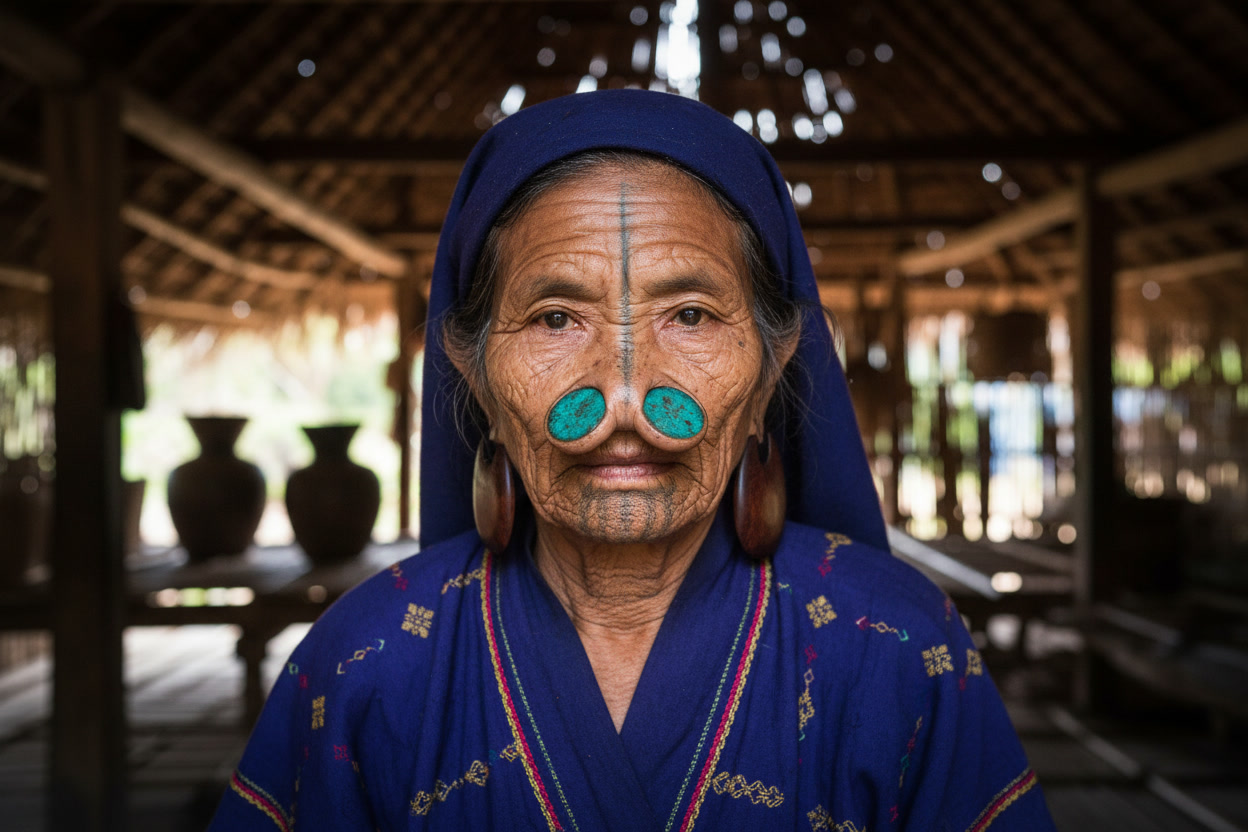
One of India’s most unique tribal beauty customs originated with the Apatani people of Arunachal Pradesh. Traditionally, Apatani women tattooed dark lines across their faces and inserted large wooden nose plugs into both nostrils.
Originally, this practice developed as a deterrent—neighboring tribes often abducted Apatani women because of their beauty. Over time, the tattoos and plugs evolved into a cultural ideal themselves. By the 1970s, the tradition faded, and today only older Apatani women still bear these striking features.

Dayak Tribe (Indonesia) — Elongated Earlobes
On the island of Borneo, the Dayak people traditionally regarded long, stretched earlobes as a symbol of elegance and high status. From childhood, women would wear brass weights that gradually elongated their earlobes over the years.
These weights served both as jewelry and as a measure of beauty: the longer the earlobes, the more respected the woman. Although the practice is fading among younger generations, older Dayak women still proudly wear these ornate brass ornaments.
Himba Tribe (Namibia) — Red Ochre Skin
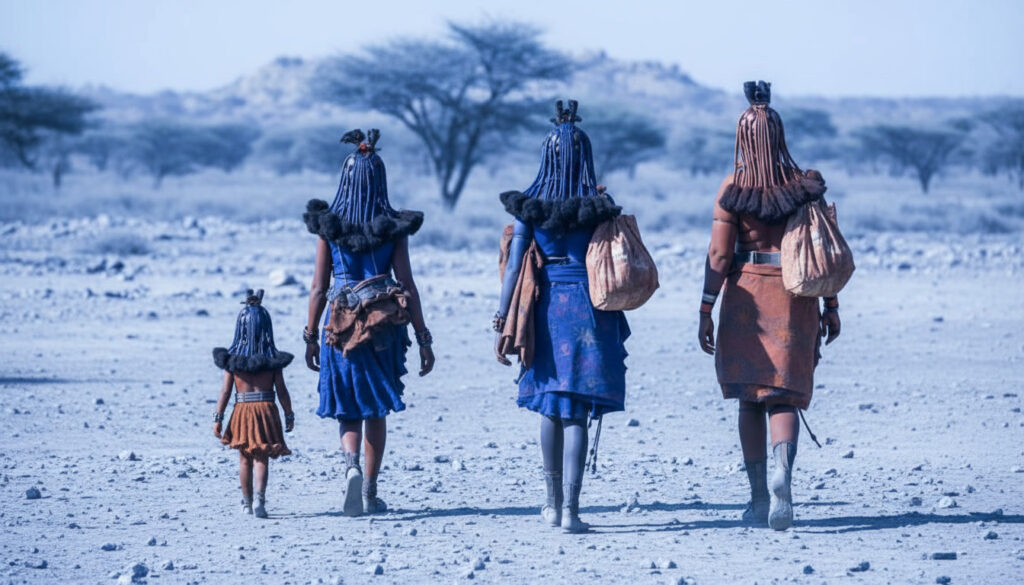
The Himba of Namibia are famous for their glowing red skin, created using otjize—a mixture of butterfat, ash, and red ochre. Women apply this paste daily to their skin and hair, giving them their iconic reddish appearance.
Beyond aesthetics, otjize protects the skin from the harsh desert sun and repels insects. Himba hairstyles also carry deep meaning: young girls wear braids that hang over their faces, while women ready for marriage tie their braids back. After marriage, both men and women cover their heads with elaborate turbans that are removed only during funerals.
Padaung (Kayan) People (Myanmar) — The “Giraffe Women” with Long Necks
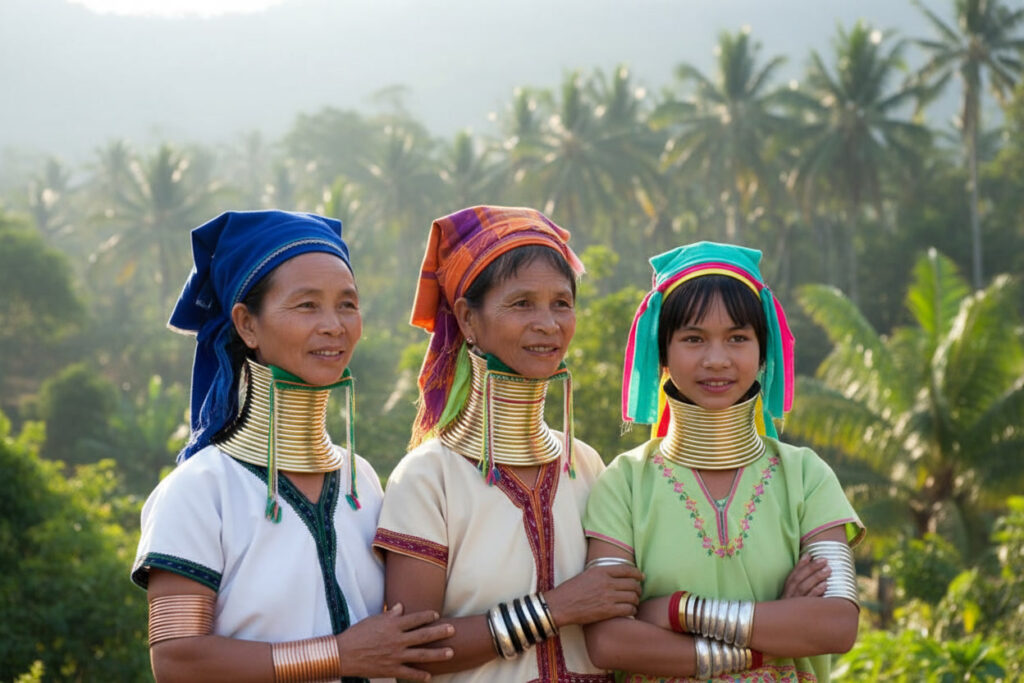
The Kayan, often called the Padaung, are world-famous for the brass coils worn around the necks, legs, and wrists of women. Girls begin wearing these coils as early as age five, adding more over time. The rings do not actually elongate the neck—instead, they press the shoulders downward, creating the illusion of extra length.
Originally, the coils were believed to make women less attractive to rival tribes and thus protect them from kidnapping. Today, the practice continues in some villages in Myanmar and northern Thailand, supported in part by tourism.
Mursi Tribe (Ethiopia) — Lip Plates
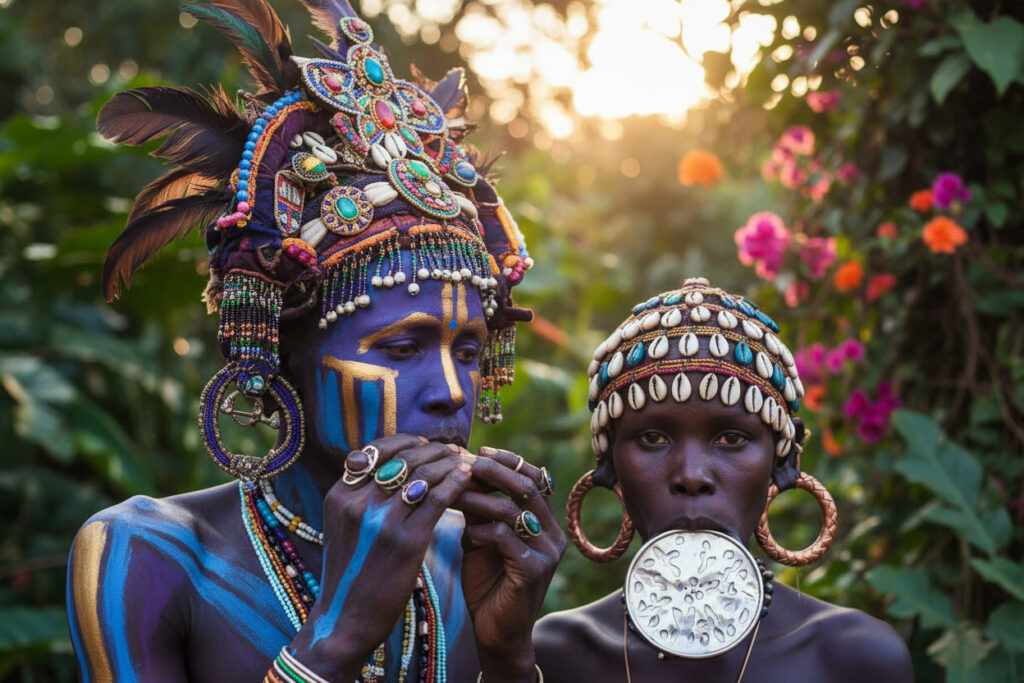
The Mursi are perhaps one of the world’s most recognized tribes due to their striking lip plates. When a girl turns 15, her lower lip is cut and gradually stretched using larger and larger wooden plugs. Eventually, she may choose to wear a clay lip plate decorated with intricate designs.
Historically, lip plates made women less appealing to slave traders. Over time, this symbol of survival transformed into a hallmark of beauty, maturity, and identity. Mursi women often complement their lip plates with elaborate headpieces made from flowers, horns, and natural pigments.
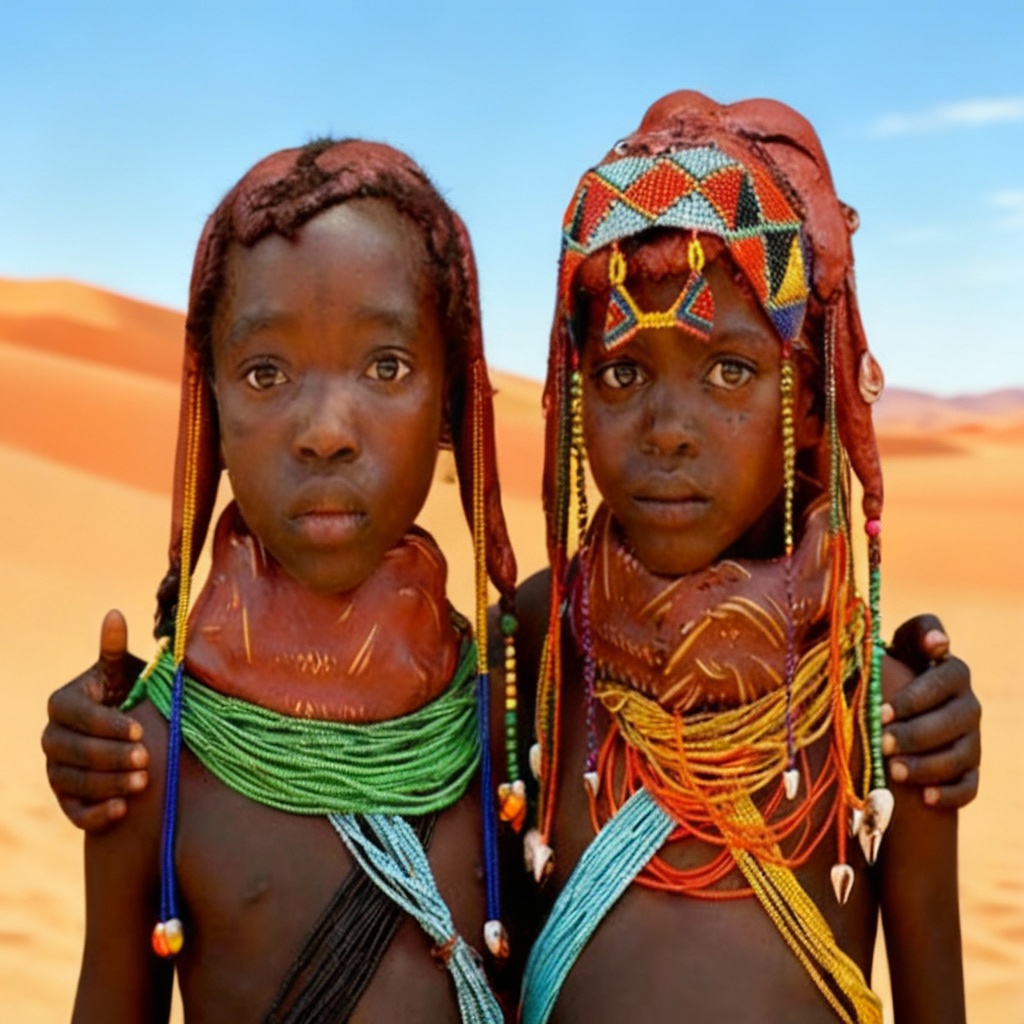
Mwila Tribe (Angola) — Elaborate Hairstyles and Symbolic Necklaces
For the Mwila women of Angola, beauty is expressed through hair. Their hairstyles—called nontombi—consist of 4 to 6 sections coated with a mixture of butter, herbs, red stone powder, and tree bark.
The decorations woven into their hair, including beads and cowrie shells, indicate a woman’s age, social role, or family events. For example, a young girl with three nontombi hairstyles is usually mourning a relative.
Equally symbolic are Mwila necklaces, worn throughout different life stages. Some are so heavy and layered that women never remove them, even while sleeping.
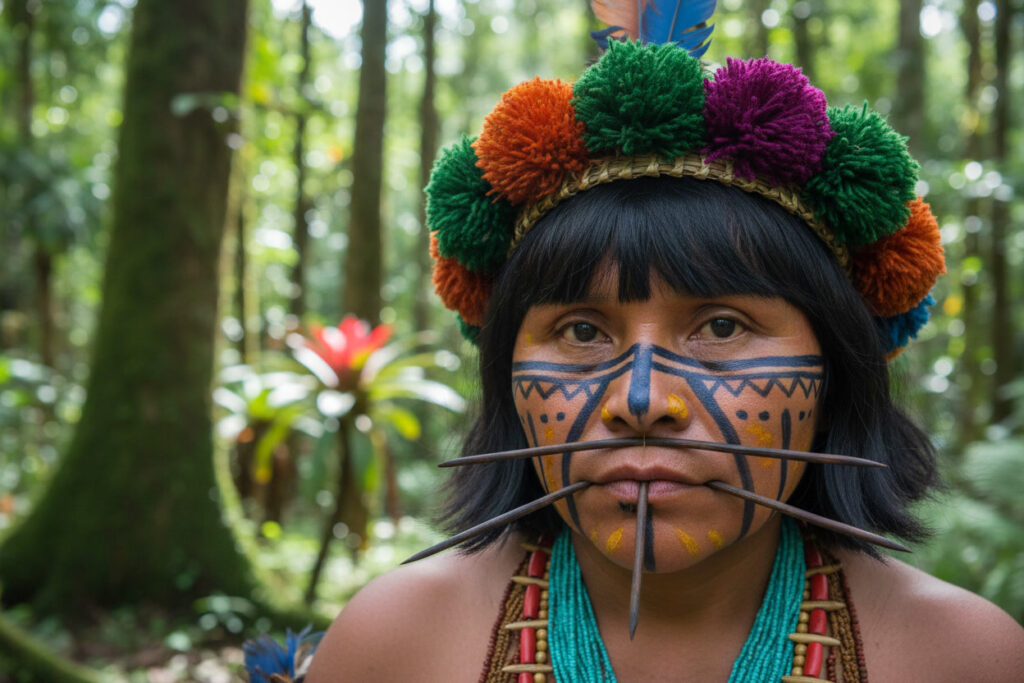
Yanomami Tribe (Brazil) — Piercing Sticks
The Yanomami, one of the least-contacted Indigenous groups in the Amazon, use wooden sticks inserted through the nose, cheeks, and lips during ceremonies. Anthropologists believe these piercings represent beauty, adulthood, or spiritual connection.
Because the Yanomami live in remote and protected areas, much about their traditions remains unknown, but their striking facial adornments remain one of their most distinctive cultural marks.



 English
  Ukrainian
This site was… how do I say it? Relevant!! Finally I have found something that helped me.
Appreciate it!