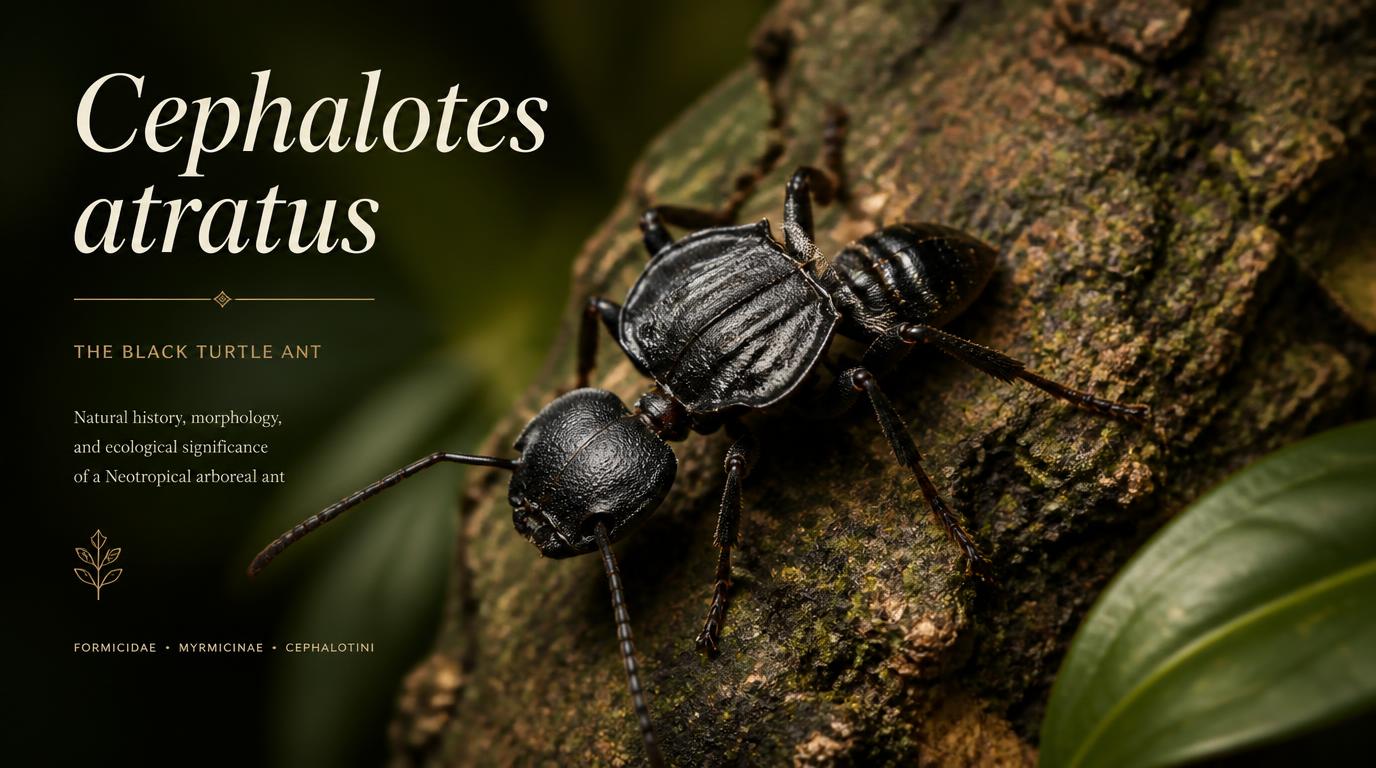
Cephalotes atratus: The Armored Ant That Can Glide Through the Forest
Cephalotes atratus is a remarkable tropical ant known for its large body, unusual appearance, and ability to steer itself while falling from trees. Often called a gliding or parachuting ant, this species has developed an impressive way to avoid landing on the forest floor when it loses its grip on a branch.
Unlike many ants that build underground nests, Cephalotes atratus lives in trees and relies on its specialized body and climbing abilities to survive in its forest habitat. Here are four fascinating facts about this unusual ant.
1. An Unusual, Armored Appearance
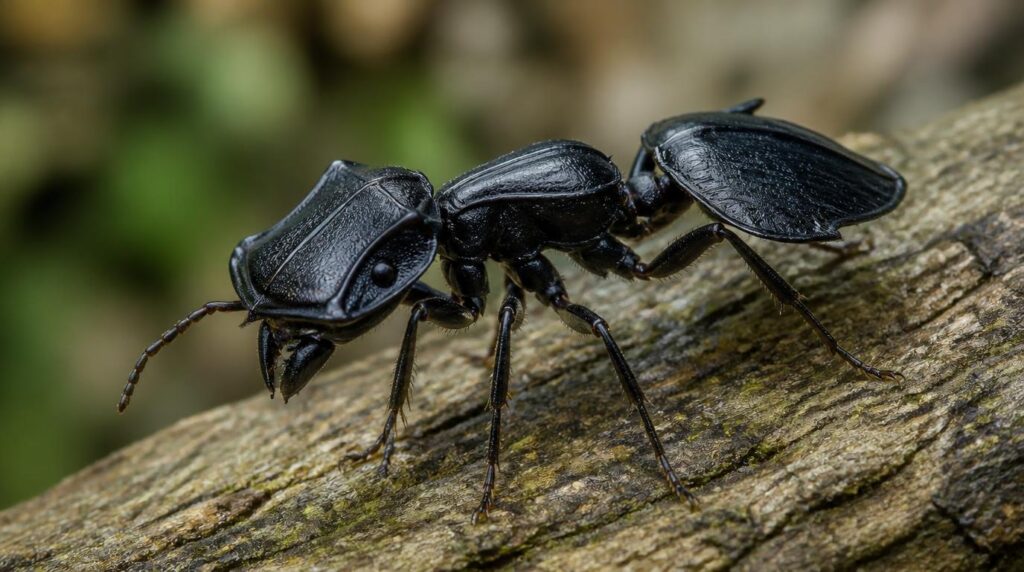
One of the most distinctive features of Cephalotes atratus is its broad, flattened head. Its angular shape gives the ant an almost armored appearance, while its dark coloration makes it look particularly striking.
Workers are generally large and predominantly black, with strong legs adapted for climbing tree trunks and branches. Their bodies have a robust, heavily armored appearance, helping distinguish them from many other ant species.
Males differ in appearance from workers and females, often displaying a darker head and thorax with reddish-brown coloring on parts of the abdomen and legs. These differences reflect the distinct roles and reproductive functions within the colony.
You may also like: Nature’s Creepiest Insects: A Look at the World’s Weirdest and Wildest Bugs
2. The Ant That Can Glide
Cephalotes atratus is sometimes called a parachuting ant because it can control its descent after falling from a tree. Although it does not fly, it can steer itself through the air and redirect its fall toward the tree trunk.
This ability is particularly useful for an ant that spends much of its life high above the ground. Landing on the forest floor can leave an individual far from its colony, surrounded by unfamiliar terrain and potential predators.
By steering back toward the tree, the ant improves its chances of reaching familiar routes and returning to its nest. This behavior is an impressive example of how specialized movement can help an animal survive in a complex habitat.
3. Diet and Habitat
Cephalotes atratus is an omnivore that feeds on a variety of available food sources. One important source of food is the sugary, honeydew-like secretion produced by insects that feed on plant sap.
The ants can also consume smaller insects and scavenge organic material. They may descend from trees to investigate food sources on the ground, including insect remains and other organic debris.
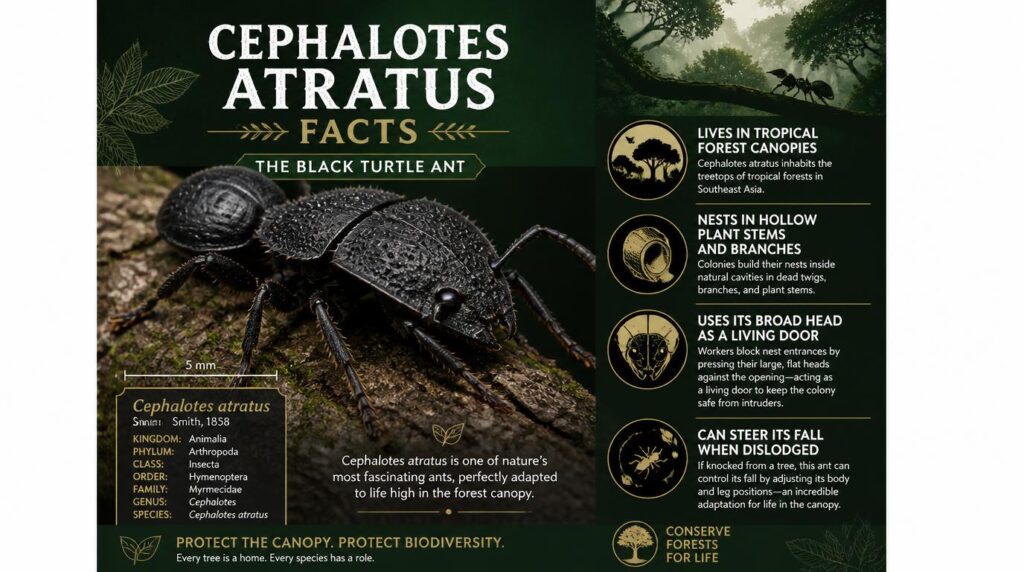
This species occurs in tropical regions of South America and is associated with wooded habitats, including tropical forests and areas with scattered trees. Colonies nest in cavities inside living or dead trees rather than constructing the familiar underground nests of many other ants.
Within these cavities, the colony occupies a network of chambers and passages that supports its daily activities.
4. A Parasite That Makes Ants Look Like Berries
One of the strangest details associated with Cephalotes atratus involves a parasitic infection that changes the appearance of an ant’s abdomen.
The source describes ants infected by a parasite as developing enlarged, reddish abdomens that resemble ripe berries. This unusual appearance may deceive birds into eating the infected ants, potentially allowing the parasite to continue its life cycle.
The process is an example of parasite-induced changes in a host’s appearance that may benefit the parasite. By altering how an infected animal looks, a parasite can potentially influence interactions between the host and other species.
However, the exact parasite involved and the details of its life cycle should be verified before making more specific claims about how the infection spreads.