What Is a Dik-Dik? 10 Fascinating Facts About Africa’s Tiny Antelope
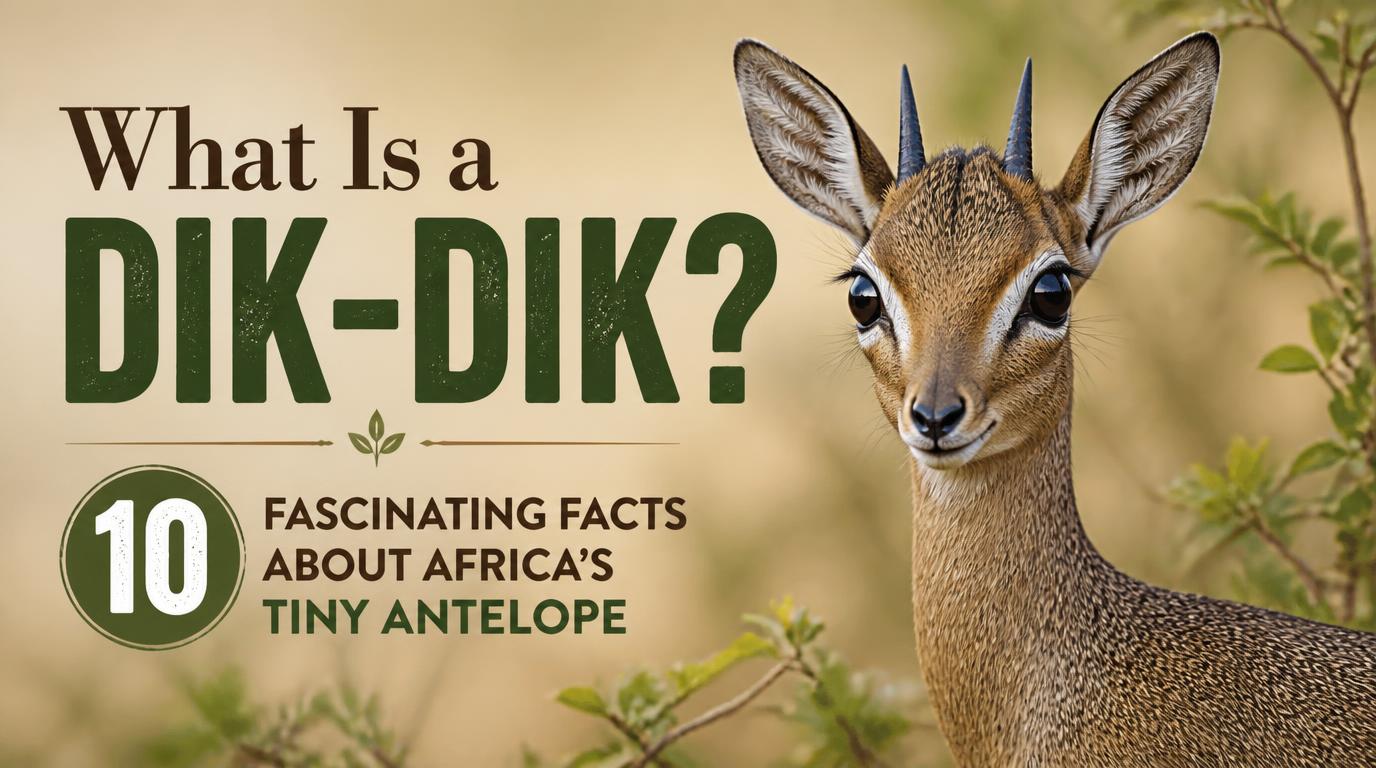
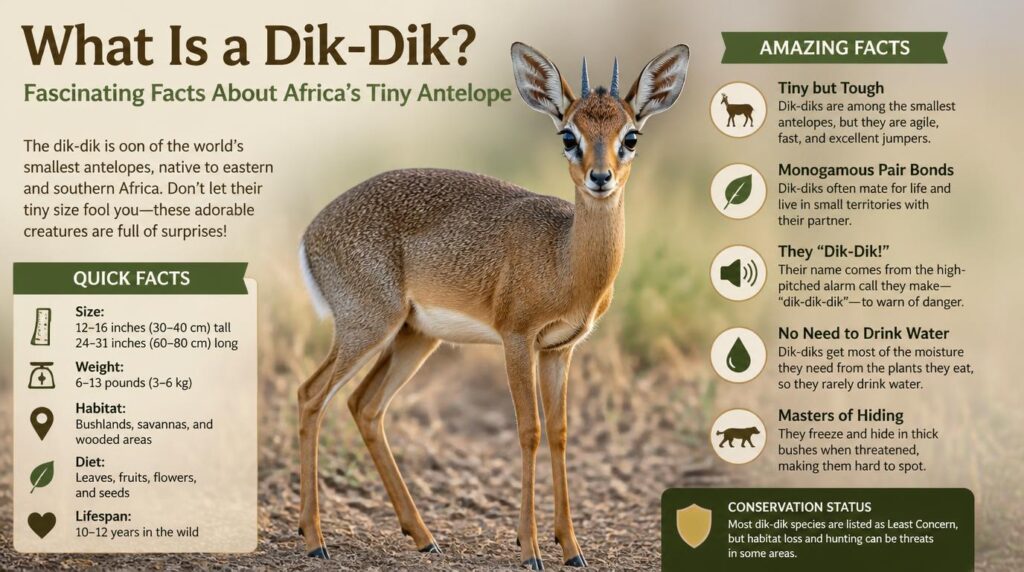
Dik-diks are among the smallest and most unusual antelopes in Africa. These tiny members of the Madoqua genus live mainly in eastern and southern Africa, where they inhabit dry scrublands, savannas, and other areas with dense vegetation.
They may look like miniature deer at first glance, but dik-diks are true antelopes with several remarkable adaptations. Their small size, shy behavior, unusual name, strong pair bonds, and ability to survive in dry environments make them fascinating animals to encounter on safari.
Spotting one is not always easy. Dik-diks are small, well camouflaged, and often stay hidden in vegetation. But if you do manage to see one in the wild, it is likely to be one of the most memorable sights of your trip.
Here are some fascinating facts about these tiny African antelopes.
How Big and Fast Is a Dik-Dik?
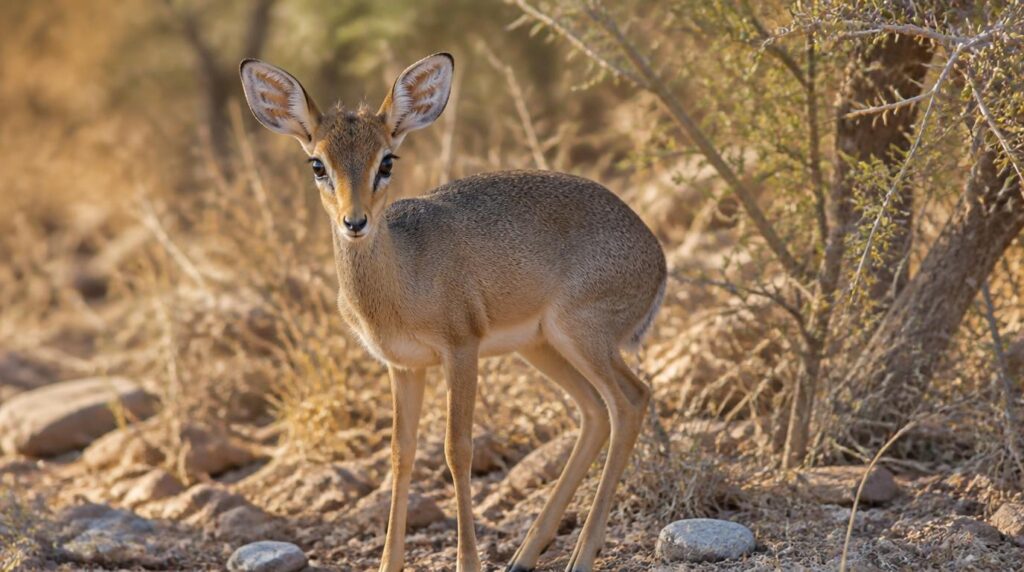
Dik-diks are remarkably small. Adults typically stand around 30–40 centimeters tall at the shoulder and weigh only about 2–6 kilograms.
Their compact size allows them to move easily through dense vegetation, where larger antelopes would struggle. Despite their tiny bodies, dik-diks can run at speeds of up to 40 km/h when escaping danger.
They are not the smallest antelopes in Africa, however. That distinction belongs to the royal antelope of West Africa, which can stand only around 25 centimeters tall.
You may lso like: Fascinating and Unusual Animals of Africa
Where Does the Name “Dik-Dik” Come From?
The name “dik-dik” sounds unusual, but its origin is actually quite straightforward.
These antelopes are named after one of their characteristic alarm calls. When disturbed, they can produce a sharp, whistling sound that resembles “dik-dik.” Females are particularly associated with producing this warning call.
The sound can alert a mate to potential danger and may also signal that a predator is nearby.
There Are Several Types of Dik-Dik
Dik-diks belong to the genus Madoqua, which includes several closely related species. The source describes four main types:
Guenther’s dik-dik is found in parts of Kenya, Somalia, and Ethiopia. It has a reddish-brown coat and feeds on vegetation.
Kirk’s dik-dik is the most widespread type and occurs in countries including Tanzania, Kenya, Somalia, Namibia, and Angola. It is particularly well adapted to dry environments and obtains much of its water from the vegetation it eats.
Silver dik-diks are among the smallest members of the group, weighing only around 2–3 kilograms. They occur in southern Ethiopia and Somalia.
Salt’s dik-dik resembles the silver dik-dik and inhabits dry regions of Ethiopia, Somalia, Kenya, and Eritrea.
Dik-Diks Don’t Live in Large Herds
Many African antelopes live in large herds, where numbers provide a degree of protection from predators. Dik-diks have taken a very different approach.
They typically live as pairs, occupying and defending a relatively small territory. Instead of relying on a large group for safety, a pair can remain alert and respond quickly when danger approaches.
This solitary lifestyle is one of the characteristics that makes dik-diks different from many of Africa’s better-known antelopes.
Dik-Diks Form Strong Pair Bonds
Dik-diks are often described as monogamous animals that maintain long-term pair bonds.
A male and female can remain together while defending their territory and watching for predators. Young animals eventually leave their parents’ territory, with males and females being driven away by their respective parents.
Their strong social bonds are particularly useful for such a small species. While one animal feeds, the other can remain alert for approaching predators.
Who Hunts Dik-Diks?
Their tiny size makes dik-diks vulnerable to a wide range of predators.
Leopards and cheetahs can prey on them, as can smaller predators such as caracals, jackals, African wild cats, servals, and hyenas. Birds of prey can also pose a threat because dik-diks are small enough to be targeted by large eagles.
Lions generally do not specialize in hunting dik-diks. A tiny antelope weighing only a few kilograms provides little food compared with the energy required to catch it.
For a dik-dik, however, even a relatively small predator can be extremely dangerous. Their survival depends heavily on vigilance, camouflage, and rapid escape.
Dik-Diks Can Breed Throughout the Year
Unlike many animals with a tightly defined breeding season, dik-diks can reproduce throughout much of the year.
This flexibility allows a pair to time births according to conditions in their territory. When food and vegetation are more favorable, raising a young animal becomes easier.
The pair’s close relationship also plays an important role in reproduction and survival. Dik-diks live in relatively small territories, and both partners contribute to maintaining their space and remaining alert to danger.
Dik-Diks Use Secretions to Mark Their Territory
Dik-diks have an unusual way of communicating territorial information.
They possess a preorbital gland near the eye that produces a distinctive secretion. The animals can rub their heads against vegetation, leaving this scent marker behind.
This chemical information helps communicate the presence of a particular animal or pair to other dik-diks. It is an alternative to the more familiar territorial marking methods used by many mammals.
They Also Use Dung to Mark Their Territory
Dik-diks use more than scent glands to establish territorial boundaries. They also create distinctive dung piles.
Pairs repeatedly deposit droppings in particular locations, creating visible markers throughout their territory. These dung middens can provide information to neighboring animals about which area is already occupied.
Rather than constantly fighting with rivals, dik-diks can use these scent and visual signals to communicate territorial ownership.
Dik-Diks Are Highly Adapted to Dry Environments
Many dik-diks live in hot, dry habitats where access to drinking water can be limited.
Instead of depending heavily on water holes, they obtain much of the moisture they need from their food. They feed on leaves, shoots, fruits, and other vegetation that can provide both nutrients and water.
Their small bodies also help them conserve resources. Dik-diks avoid the hottest parts of the day and often become more active during cooler periods.
They have additional physiological adaptations that help reduce water loss, allowing them to survive in environments where larger animals may need to travel considerable distances to find water.
They Are Surprisingly Common but Difficult to Spot
Dik-diks can be relatively numerous in some parts of Africa, yet they are surprisingly difficult for visitors to find.
Their small bodies and excellent camouflage allow them to disappear into dry vegetation. During the hottest part of the day, they may remain motionless and hidden among bushes and grasses.
This creates an interesting paradox: an animal can have a substantial population while remaining one of the hardest African antelopes for a safari visitor to spot.
Their size, cautious behavior, and natural camouflage all work together to keep these charming little antelopes largely out of sight.