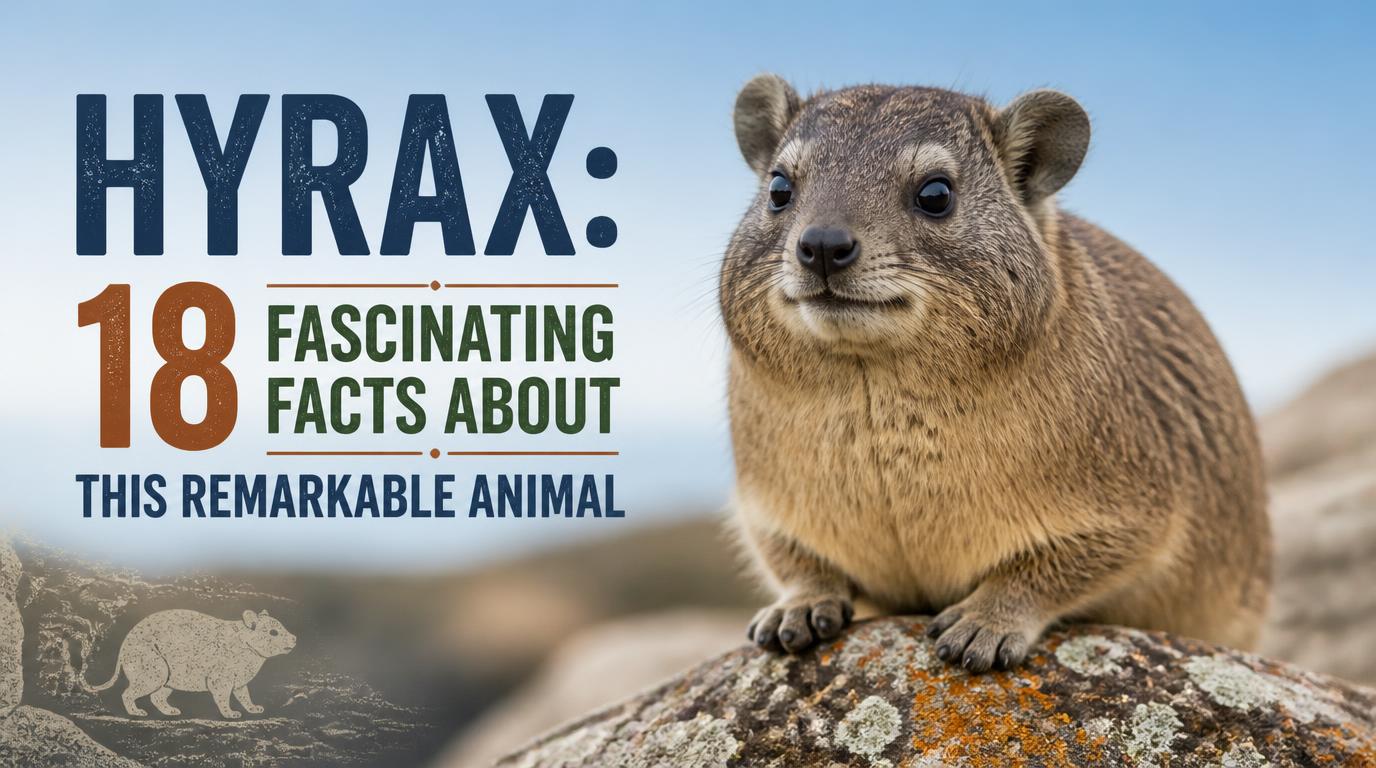
Hyrax: 18 Fascinating Facts About This Remarkable Animal
Hyraxes may look both cute and intimidating at the same time. These small mammals can be found among rocky cliffs, in trees, and in dense shrubs, where they watch the movements of people and other animals around them. Despite their somewhat fierce appearance, they are generally not aggressive unless threatened.
Although hyraxes resemble rodents, they belong to the mammalian order Hyracoidea. They rarely pose a danger to humans, but they can bite if handled or cornered. For this reason, they are not suitable pets and are best observed in their natural habitats.
Here are 18 fascinating facts about these unusual animals.
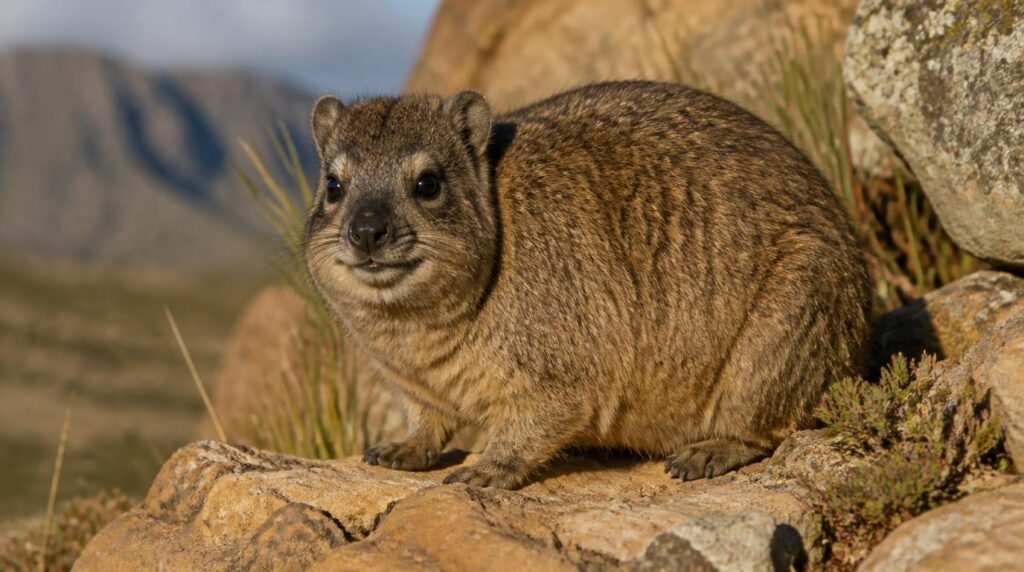
1. What Is a Hyrax?
Hyraxes are small, stocky mammals found throughout parts of Africa and the Middle East. Depending on the species, they live among rocky outcrops, in forests, or in trees. They feed primarily on plant material, including leaves, grasses, and fruits.
At first glance, a hyrax might be mistaken for a large guinea pig or a rabbit with rounded ears. It has a compact body, a rounded head, short neck, and small tail. Its legs are relatively short, and its toes have specialized nails that help it move across rocks and other surfaces.
Despite their rodent-like appearance, hyraxes belong to a distinct group of mammals with some surprising evolutionary relationships.
You may also like: Fascinating Facts About Quokkas: Australia’s Smiling Marsupials
2. There Is More Than One Type of Hyrax
There are three main groups of hyraxes: rock hyraxes, bush hyraxes, and tree hyraxes. They inhabit different environments across Africa and parts of the Middle East, including areas of Jordan and Lebanon.
These animals can adapt to a range of elevations and climates. Some live near sea level, while others inhabit mountainous terrain. They are often found in dry landscapes, rocky areas, and regions with suitable vegetation.
However, hyraxes depend on external warmth to help regulate their body temperature, which is one reason they are frequently seen basking in the sun.
3. Hyraxes Have Surprisingly Large Relatives
Despite their small size, hyraxes are evolutionarily related to some of the largest mammals on Earth. Their closest living relatives include elephants and sirenians, the group that contains manatees and dugongs.
One clue to these relationships is found in their anatomy. Male hyraxes have prominent upper incisors that resemble small tusks and continue growing throughout their lives. These features distinguish them from rodents, even though the two groups can look remarkably similar.
Their evolutionary history demonstrates that outward appearance does not always reveal an animal’s closest relatives.
4. Rock Hyraxes Love Sunbathing
The rock hyrax (Procavia capensis) is widespread across parts of Africa and is particularly well adapted to rocky habitats. It generally has grayish or brownish fur, a blunt muzzle, and a compact body.
Rock hyraxes often live in colonies that can contain dozens of individuals. They are frequently seen sitting together on sun-warmed rocks, especially in the morning.
Sunbathing is important because hyraxes have limited ability to maintain a stable body temperature without environmental assistance. Warming themselves in the sun helps them become active and conserve energy.
Their habit of gathering on rocks can make an entire colony appear to be a group of miniature mammals enjoying a communal sunbathing session.
5. Rock Hyraxes Sing Distinctive Songs
One of the most intriguing discoveries about rock hyraxes concerns their vocal communication. Males produce elaborate vocal sequences that combine several different sounds in a recognizable order.
These calls can include squeals, whistles, grunts, and other vocal elements. Researchers have found that the sequences follow patterns rather than consisting of completely random noises.
Even more interestingly, vocalizations can differ between geographic regions, creating variations sometimes described as regional dialects.
Although these calls do not establish that hyraxes have a human-like language, they offer valuable insight into how animals communicate and how vocal behavior can vary between populations.
6. The Bush Hyrax Is Slightly Smaller Than the Rock Hyrax
The bush hyrax, also known as the yellow-spotted rock hyrax (Heterohyrax brucei), resembles its rocky relative but is generally smaller.
One distinguishing feature is a pale patch above the eye, which gives the animal a characteristic appearance. Its muzzle is often darker and more pointed than that of the rock hyrax.
Bush hyraxes live in rocky habitats where they can find shelter and open areas for basking. They commonly form colonies, and a dominant male may defend the group and its territory.
Their lifespan varies according to environmental conditions and other factors, but bush hyraxes can live for several years in the wild.
7. Tree Hyraxes Are Harder to Spot
Tree hyraxes, including the western tree hyrax (Dendrohyrax dorsalis), spend much of their time in wooded habitats. Unlike rock hyraxes, which are often visible on exposed cliffs, tree hyraxes are more difficult to observe because they live among trees and dense vegetation.
Many tree hyraxes are primarily nocturnal. They become active after dark, when they forage and move through their forest habitats.
Their fur is generally longer than that of rock hyraxes and may appear brownish-gray. Tree hyraxes are also more solitary in their habits, although individuals may come together during the breeding season.
Their elusive behavior means that people may hear their distinctive calls at night without ever seeing the animals themselves.
8. Hyraxes Are Larger Than Most Rodents
Hyraxes may resemble oversized rodents, but many species are noticeably larger than familiar small mammals such as mice and rats.
Depending on the species, an adult hyrax may measure approximately 50–75 centimeters (20–30 inches) in length and weigh up to around 5.4 kilograms (12 pounds).
Their compact bodies, rounded heads, and short legs give them a distinctive silhouette. Despite their relatively small size, they are strong enough to climb across steep rocky surfaces and navigate difficult terrain.
9. Different Hyrax Species Generally Do Not Interbreed
Rock, bush, and tree hyraxes differ in their anatomy, behavior, and preferred habitats. Although some species may occupy overlapping geographic regions, they belong to distinct species.
Their differences in ecology and reproductive biology help maintain these distinctions. The presence of several hyrax species in the same broader region does not mean that they routinely mate with one another.
Their diversity illustrates how related mammals can evolve different lifestyles while retaining certain shared anatomical characteristics.
10. Hyraxes Appear in Biblical Texts
Hyraxes are mentioned in biblical passages, although historical translations have sometimes used words such as coney or rock rabbit to describe them.
These references reflect the animal’s distinctive appearance and behavior, which may have reminded observers of rabbits or other small mammals. Proverbs 30:24–26 describes creatures that are small yet notably resourceful, including animals that live among rocks.
Hyraxes are also mentioned in biblical dietary laws. Their appearance in ancient texts shows that people in the region were familiar with these animals long before modern zoology established their evolutionary relationships.
11. Hyrax Feet Are Specially Adapted for Climbing
Hyraxes have unusual feet that help them grip uneven surfaces. Their soles are soft and flexible, and specialized skin structures help create traction on rocks.
Some species can move confidently across steep rock faces that would be difficult for many other mammals to navigate. Their feet are particularly well suited to climbing and maintaining contact with irregular surfaces.
Hyraxes also have specialized claws that assist with grooming and scratching. These adaptations help them manage their coats and navigate their environments.
Their ability to climb effectively is essential for escaping predators and reaching safe resting places.
12. Hyraxes Have Multi-Chambered Stomachs
Hyraxes are herbivores whose diets contain plant material that can be difficult to digest. Their digestive systems include a three-chambered stomach and microorganisms that help break down food.
This microbial assistance allows them to obtain nutrients from vegetation that would otherwise be challenging to digest efficiently.
Their digestive adaptations are one reason hyraxes can survive on leaves, grasses, and other plant foods in environments where resources may vary throughout the year.
13. Young Hyraxes May Eat Their Parents’ Droppings
One of the stranger aspects of hyrax biology involves the development of the digestive system in young animals.
Newborn mammals often depend on microorganisms to help digest their food. In hyraxes, coprophagy — the consumption of feces — can help young animals acquire microorganisms that support digestion.
Although the behavior may seem unpleasant to humans, it serves a biological purpose. Similar strategies occur in several other mammalian species, where ingesting fecal material helps establish or maintain a functional gut microbiome.
14. Hyrax Droppings Have Other Uses
Hyrax droppings and urine have attracted interest for both traditional and scientific reasons. In parts of southern Africa, these substances have been used in traditional remedies.
Hyrax waste also contributes to the formation of a substance known as hyraceum. This material develops from accumulated and aged hyrax urine and feces, often in sheltered rocky locations.
Hyraceum has been used in perfumery for its distinctive musky odor. Its unusual origin makes it an example of how natural materials can acquire specialized uses in human industries.
15. Baby Hyraxes Develop for a Relatively Long Time Before Birth
For an animal of its size, the hyrax has a relatively long gestation period. Pregnancy typically lasts around six to seven months, although the exact duration varies by species.
A litter commonly contains two to four young. Compared with the newborns of many small mammals, baby hyraxes are relatively well developed at birth.
They can often walk and move around soon after being born, and they begin exploring their surroundings at an early age. They also start consuming solid food while continuing to nurse.
Hyraxes generally reach sexual maturity within their first couple of years, depending on the species and environmental conditions.
16. Hyraxes Are Primarily Herbivores
Hyraxes feed mainly on grasses, leaves, shoots, fruits, and other plant material. Their exact diet depends on the species and the plants available in their habitat.
They may occasionally consume unusual food items, but describing hyraxes as regular predators of birds or lizards would overstate their typical feeding behavior. Plant material remains the principal component of their diet.
Their feeding habits allow them to survive in a variety of environments, from rocky landscapes with sparse vegetation to areas with more abundant shrubs and trees.
17. Hyrax Colonies Have Communal Latrine Sites
Hyrax colonies often use specific locations for depositing urine and feces. These communal latrines may develop beneath rock overhangs or in sheltered areas near their resting sites.
Repeated use allows deposits to accumulate over long periods. These deposits can preserve biological and environmental information, making them valuable to researchers studying past ecosystems.
The practice also demonstrates that hyraxes have established social and spatial routines, rather than using their habitat randomly.
18. Hyraxes Have Natural Predators — and Should Not Be Kept as Pets
In the wild, hyraxes are preyed upon by several large predators, including eagles, leopards, and lions. Verreaux’s eagle is particularly well known for hunting rock hyraxes, which can make up a substantial part of its diet in some areas.
Hyraxes rely on vigilance, access to rocky shelters, and quick movement to avoid predators. Although they may bite when threatened, they are not equipped to defend themselves against larger carnivores.
Despite their appealing appearance, hyraxes are wild animals rather than domesticated pets. Their specialized dietary, social, and environmental needs make them difficult to care for appropriately in a household. Observing them in their natural habitat is a better way to appreciate these unusual mammals.