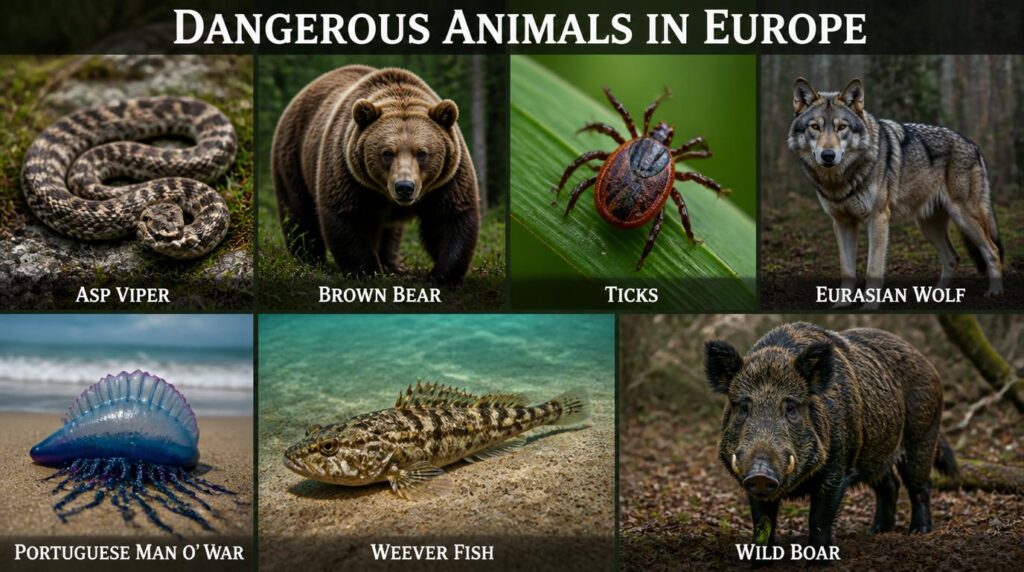
Dangerous Animals in Europe: 7 Species You Should Know
Europe is often considered a relatively safe continent for wildlife encounters, especially compared with regions known for large numbers of highly venomous animals. However, its forests, mountains, coastlines, and grasslands are home to species that can pose serious risks to humans.
From venomous snakes and disease-carrying ticks to powerful mammals and marine animals with painful stings, these creatures deserve respect. Most do not actively seek out people, but accidental encounters or defensive behavior can lead to injuries.
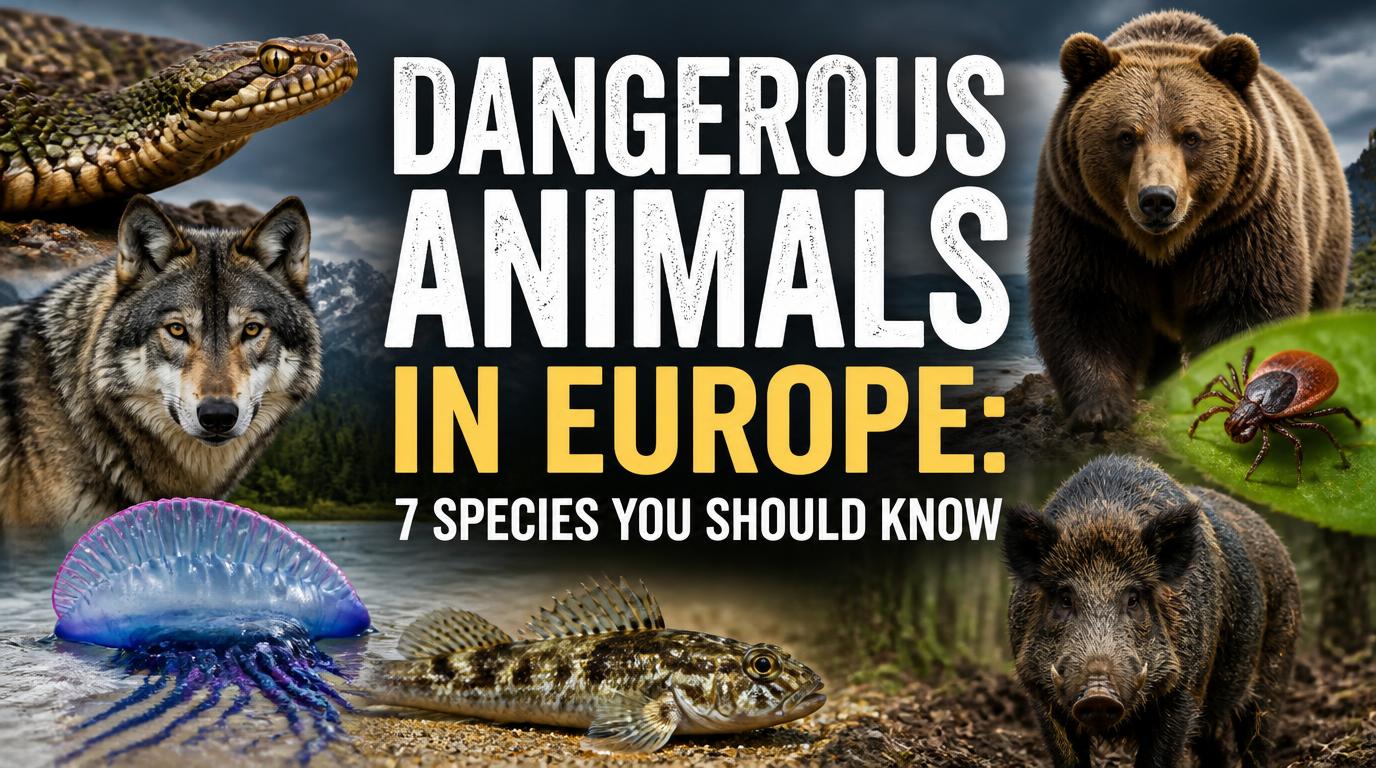
Here are seven dangerous animals found in Europe and what makes them worth knowing about.
1. Asp Viper
The asp viper is a venomous snake found in parts of southwestern and central Europe, particularly in France, Italy, and neighboring regions. It inhabits a range of environments, including rocky hillsides, woodland edges, and areas with dense vegetation.
Like other vipers, it has specialized hollow fangs that deliver venom when it bites. An envenomation can cause pain, swelling, and other local symptoms. In more serious cases, complications affecting blood circulation, kidney function, or other organs may occur.
Although severe outcomes are possible, not every bite causes life-threatening illness. The severity depends on factors such as the amount of venom injected and the person’s health.
Asp vipers generally avoid people and may bite when accidentally stepped on, cornered, or handled. If you encounter one in the wild, leave it alone and give it space. Any suspected venomous snakebite requires urgent medical evaluation.
2. Brown Bear
The brown bear is one of Europe’s largest terrestrial mammals. It lives in several regions, including parts of Scandinavia, the Carpathian Mountains, the Balkans, and other areas where suitable habitat remains.
These powerful animals have muscular bodies, strong jaws, and long claws. Although brown bears usually avoid humans, they can become dangerous when surprised at close range, defending food, or protecting their cubs.
A defensive encounter may escalate if a bear perceives a person as a threat. For this reason, hikers should remain alert in bear country, avoid approaching cubs, and never attempt to feed or photograph a bear from close range.
If you encounter a bear, do not run. Stay calm, avoid sudden movements, and slowly increase the distance when possible. Follow local wildlife guidance, as the appropriate response can depend on the bear’s behavior and the circumstances of the encounter.
You may also like: Dangerous Animals in South America
3. Ticks
Ticks are tiny blood-feeding arachnids found in forests, grasslands, gardens, and other habitats throughout much of Europe. They attach to people and animals to feed, often remaining unnoticed until they are discovered on the skin.
Their main danger is not the bite itself but the pathogens some ticks can transmit. Depending on the species and region, these include the bacteria responsible for Lyme disease and the virus that causes tick-borne encephalitis.
Other tick-associated infections occur in particular regions, but not every tick carries a pathogen, and not every bite results in illness.
After spending time outdoors, check your skin, scalp, and clothing for ticks. Remove attached ticks promptly using fine-tipped tweezers or a suitable tick-removal tool, following public-health guidance. Seek medical advice if symptoms such as a spreading rash or fever develop after a bite.
4. Eurasian Wolf
The Eurasian wolf is a large wild canine found in parts of Europe, including areas of eastern, northern, and southern Europe. In recent decades, wolves have also returned to some regions where they had previously disappeared.
Wolves are intelligent predators that usually hunt wild ungulates and other animals. Despite their fearsome reputation, they generally avoid people, and attacks on humans are rare.
The risk may increase in unusual circumstances, such as when an animal is infected with rabies, habituated to people, or behaving abnormally. It is inaccurate to suggest that wolves routinely target children or women as preferred prey.
If you encounter a wolf, keep your distance, do not approach or feed it, and give it a clear route to retreat. If the animal approaches unusually closely or behaves aggressively, remain calm and follow guidance from local wildlife authorities.
5. Portuguese Man o’ War
The Portuguese man o’ war is a marine organism known for its floating, gas-filled structure and long, venomous tentacles. Although it resembles a jellyfish, it is actually a colony of specialized organisms called zooids that function together.
Its tentacles can deliver painful stings, even when the organism is stranded on a beach. Contact may cause intense pain, red welts, and other symptoms. Severe reactions can occasionally involve breathing or cardiovascular complications.
Portuguese man o’ wars are associated primarily with warmer ocean waters, but wind and currents can carry them into European coastal areas, particularly around the Atlantic and Mediterranean regions.
Never touch a Portuguese man o’ war, whether it is floating in the sea or washed ashore. If someone is stung, follow local emergency guidance and seek medical help if symptoms are severe or widespread.
6. Weever Fish
Weever fish are small marine fish found in European coastal waters. They often bury themselves in sandy or muddy seabeds, leaving only part of their bodies visible. This camouflage makes them easy to step on accidentally.
Several species have venomous spines on their dorsal fins and gill covers. When a person steps on a concealed fish, the spines can puncture the skin and deliver venom, causing intense pain and swelling.
Although most stings are not fatal, the pain can be severe and may last for hours. Some cases require medical treatment, particularly when complications develop.
Weever fish are a known hazard for swimmers and beachgoers in some European coastal areas. Wearing suitable footwear in shallow water may help reduce the risk of accidental stings.
Hot-water immersion is commonly recommended as first aid because heat can help relieve pain from weever fish envenomation. However, the water should not be hot enough to burn the skin, and medical advice should be sought when symptoms are severe.
7. Wild Boar
Wild boars inhabit forests, woodlands, and rural areas across much of Europe. Their adaptability also allows them to live near farms, parks, and urban edges where food is readily available.
These muscular animals have strong bodies and prominent tusks. Although they generally avoid humans, they can become dangerous when cornered, injured, surprised at close range, or protecting their young.
A charging boar can inflict deep cuts and serious injuries, particularly to the legs. Encounters may be especially risky when dense vegetation limits visibility or when people get too close to a group of animals.
If you encounter a wild boar, do not approach it or attempt to feed it. Keep your distance, avoid blocking its escape route, and move away calmly. Dogs should be kept under control, since they may provoke defensive behavior.