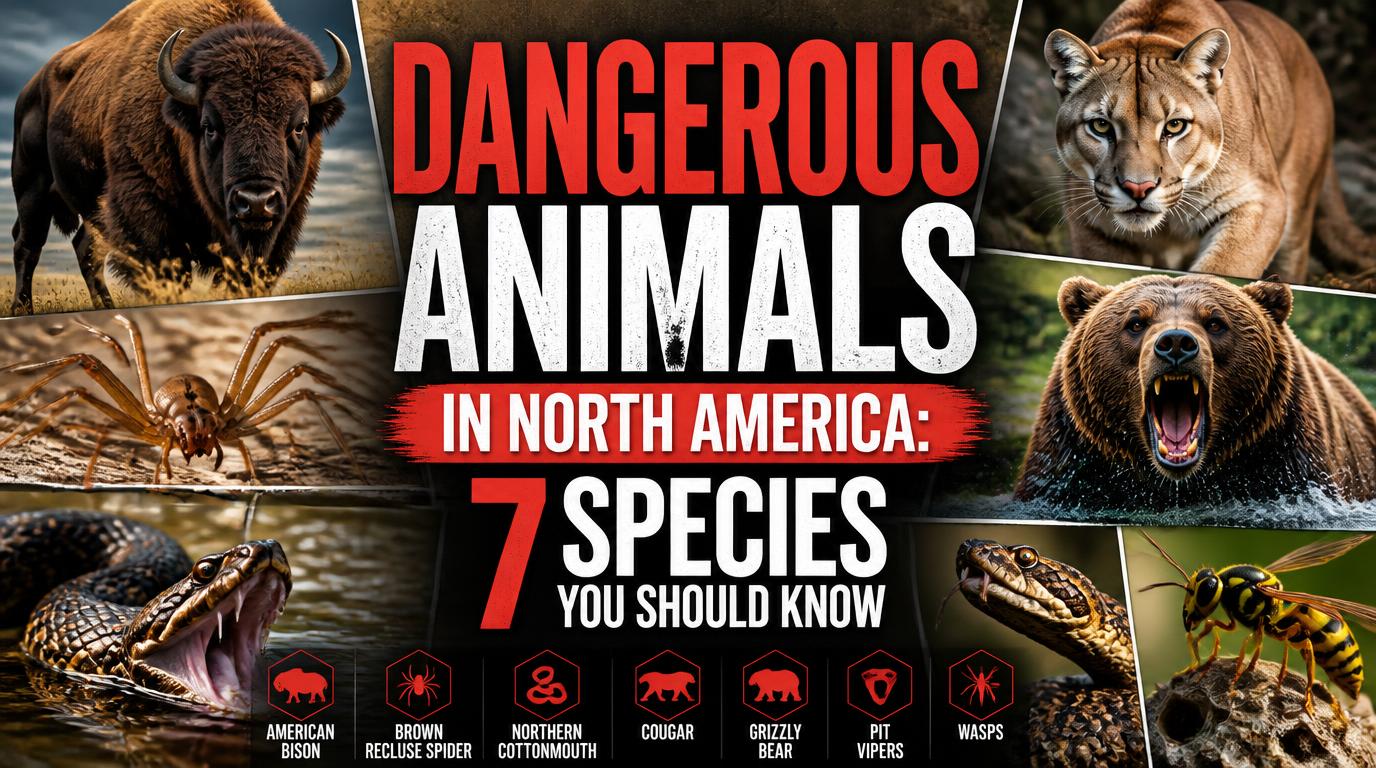
Dangerous Animals in North America: 7 Species You Should Know
North America is home to an incredible variety of wildlife, from powerful mammals to venomous snakes and stinging insects. Although most wild animals prefer to avoid people, some can cause serious injuries when threatened, surprised, or approached too closely.
Understanding how these animals behave can help you stay safe while hiking, camping, or exploring natural habitats. Here are seven dangerous animals found in North America and what makes each one worth respecting.
1. American Bison
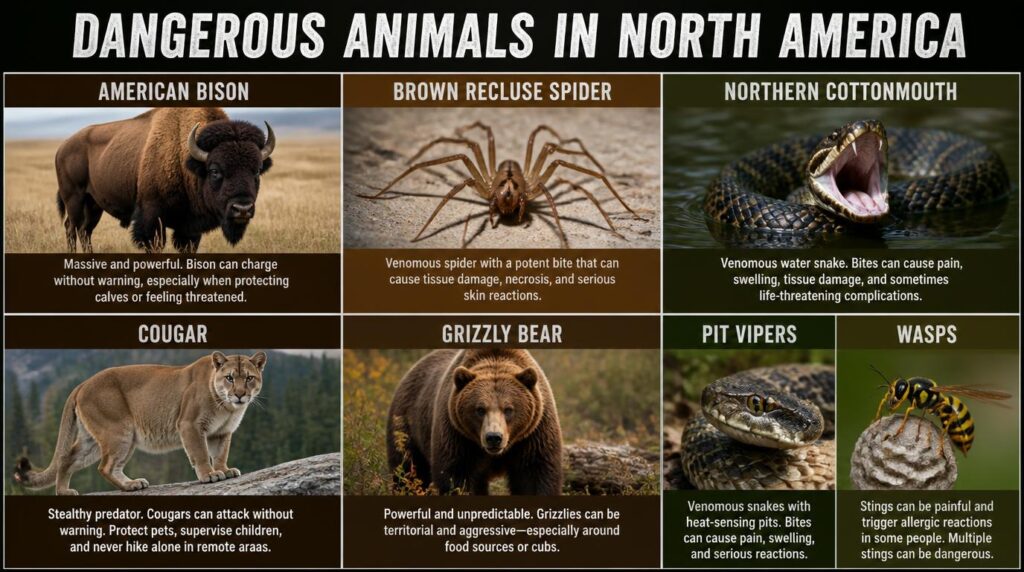
The American bison is one of the largest land mammals in North America. Its massive head, muscular shoulders, and powerful legs make it an impressive sight—and a potentially dangerous animal at close range.
Despite their bulky appearance, bison can run surprisingly fast and change direction quickly. They may charge when they feel threatened, particularly if people approach too closely or block their escape route.
Bison attacks can cause severe injuries, including fractures, deep wounds, and occasionally death. Their size and strength mean that even a brief encounter can have serious consequences.
Bison are wild animals, not domesticated cattle. When observing them in national parks or grasslands, keep a safe distance and never attempt to approach them for a photograph.
2. Brown Recluse Spider
The brown recluse is a venomous spider found primarily in parts of the central and southern United States. It is known for its secretive behavior and tendency to hide in undisturbed places, including storage boxes, closets, and areas beneath furniture.
These spiders generally bite only when trapped against the skin or otherwise threatened. Because their bites may initially cause little pain, a person might not notice one immediately.
Some bites produce redness, swelling, and a blister. In a small proportion of cases, tissue damage and skin necrosis can develop. Fever, nausea, and other systemic symptoms are possible but uncommon.
Not every suspected brown recluse bite causes serious injury, and many skin lesions attributed to these spiders have other causes. If a wound worsens or develops unusual symptoms, seek medical attention rather than attempting to diagnose the cause from appearance alone.
You may also like: The Most Dangerous Animals in Africa
3. Northern Cottonmouth
The northern cottonmouth, also known as the water moccasin, is a venomous pit viper associated with wetlands, swamps, streams, and other aquatic habitats in the southeastern United States.
Its name comes from the pale interior of its mouth, which it may display when threatened. Cottonmouths can swim and are often found near water, although they also move across land.
Their venom can damage tissue and interfere with normal blood clotting. Bites may cause severe pain, swelling, and other serious complications, although fatal outcomes are uncommon.
Cottonmouths are sometimes described as unusually aggressive, but they generally prefer to avoid confrontation. Give any snake plenty of room, never attempt to handle it, and seek emergency medical care immediately after a suspected venomous snakebite.
4. Cougar
The cougar, also called the mountain lion or puma, is a large, adaptable wild cat found across much of the Americas, including western Canada and the United States.
Cougars are powerful predators that usually hunt deer and other wild mammals. They are generally elusive, and attacks on humans are rare. Nevertheless, their strength, speed, and hunting abilities make a close encounter potentially dangerous.
Young, inexperienced animals may behave unpredictably, while other circumstances can also contribute to unusual encounters. It is inaccurate, however, to assume that cougars typically target children or women as preferred human prey.
If you encounter a cougar, do not run. Stay facing the animal, make yourself appear larger, speak firmly, and back away slowly while leaving it an escape route. If it approaches aggressively, defend yourself rather than playing dead.
5. Grizzly Bear
The grizzly bear is one of North America’s most powerful land predators. Recognizable by its muscular build and prominent shoulder hump, it possesses enormous strength, long claws, and the ability to run quickly over short distances.
Grizzlies usually avoid people when possible, but encounters can become dangerous if a bear is surprised at close range, feels threatened, or is protecting its cubs or food.
A grizzly may charge defensively when it perceives a threat. Although many encounters end without an attack, a bear’s size and strength mean that even a brief confrontation can cause severe injuries.
If a defensive grizzly attack occurs, wildlife authorities commonly advise playing dead: lie flat on your stomach, protect the back of your neck with your hands, and spread your legs to make it harder for the bear to turn you over. Keep your backpack on if you are wearing one.
Bear encounters vary, however, and playing dead is not appropriate in every situation. If a bear stalks you or attacks in a predatory manner, fight back. Learn the local wildlife authority’s recommendations before visiting bear country.
6. Pit Vipers
Pit vipers are a group of venomous snakes that includes rattlesnakes, copperheads, and cottonmouths. Several species occur across North America, inhabiting environments ranging from deserts and grasslands to forests and wetlands.
Their most distinctive feature is a pair of heat-sensitive pits located between the eyes and nostrils. These specialized organs help them detect infrared radiation from warm-bodied animals, assisting them in locating prey even in low-light conditions.
Pit viper venom varies by species but can cause intense pain, swelling, tissue damage, and problems with blood clotting. Severe envenomation can be life-threatening without appropriate medical treatment.
These snakes do not routinely seek out people to attack. Most bites occur when a snake is accidentally approached, stepped on, or handled. Watch where you place your hands and feet, stay on established trails where possible, and never attempt to pick up a snake.
7. Wasps
Wasps are widespread across North America and include paper wasps, yellowjackets, and hornets. Some species build nests in trees or shrubs, while others occupy cavities in the ground, buildings, and other sheltered locations.
Unlike honeybees, many wasps can sting repeatedly. Some species also bite, although biting is not their primary means of delivering venom. Wasps are particularly likely to defend a nest when they perceive a threat.
A sting usually causes localized pain, redness, and swelling. However, people with a severe allergy to wasp venom can experience anaphylaxis, a potentially life-threatening reaction that requires immediate emergency treatment.
To reduce the risk of being stung, avoid disturbing nests, keep food and sweet drinks covered outdoors, and move away calmly if wasps become agitated. If you suspect a severe allergic reaction, use prescribed epinephrine immediately and call emergency services.