Shrikes: The Ruthless Little Birds With a Killer Hunting Strategy
In the animal kingdom, size is not always an indicator of strength. Shrikes are a perfect example: these small songbirds may look charming, but their hunting techniques are surprisingly brutal. Despite their delicate appearance, shrikes are skilled predators capable of catching animals almost as large as themselves.
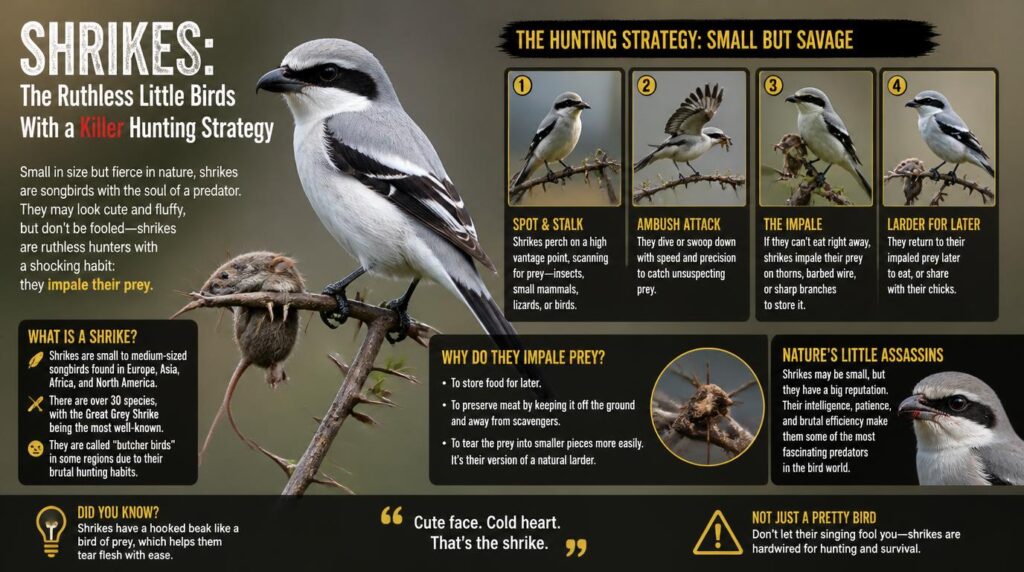
What makes these birds so unusual is their habit of impaling prey on thorns, sharp twigs, or barbed wire. This behavior has earned some shrikes the nickname “butcher birds.” Here are some fascinating facts about these remarkable hunters.
Appearance
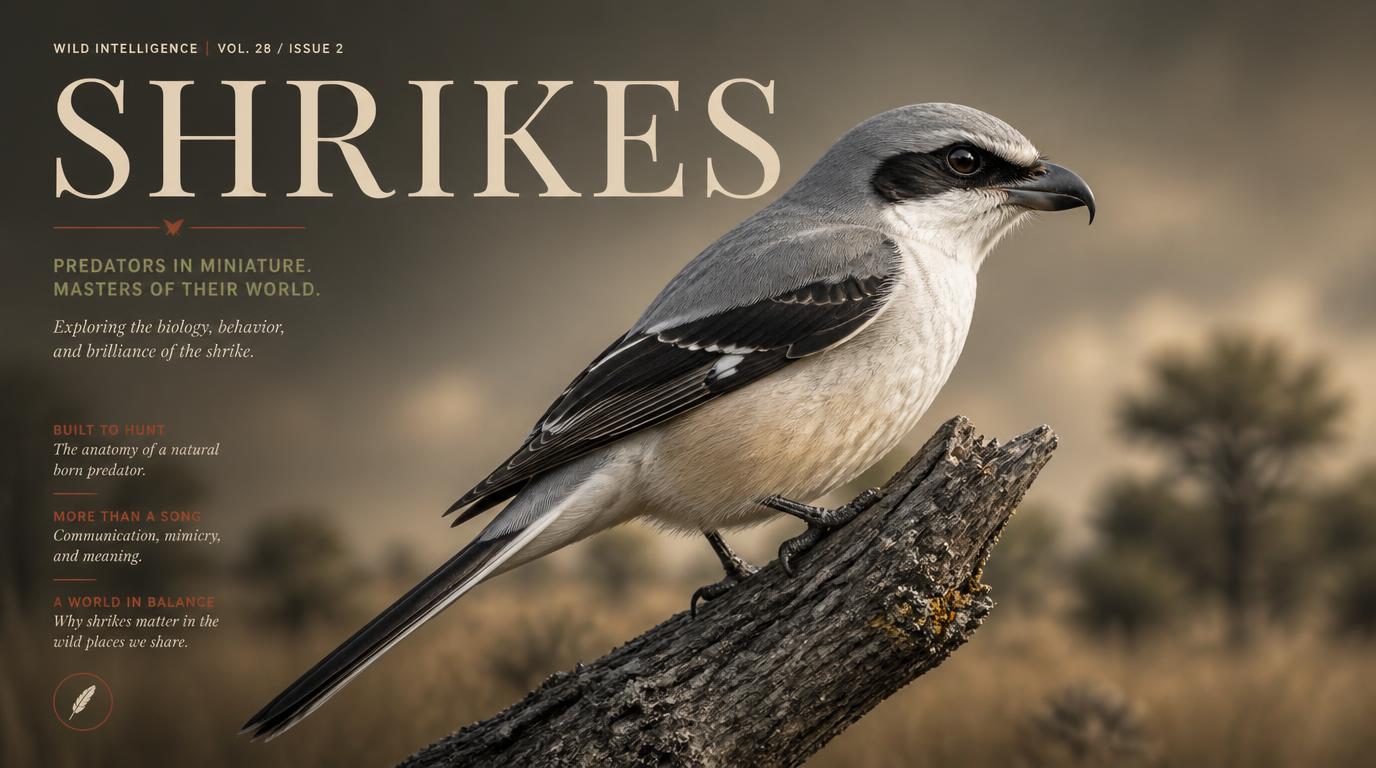
Shrikes may be fierce hunters, but their appearance is often quite attractive. They have relatively large heads, slender legs, and long tail feathers. Depending on the species, their plumage can feature combinations of gray, brown, black, cream, and white.
There are around 30–35 recognized species of shrikes, and each has its own distinctive coloration and markings.
One of their most important hunting adaptations is the hooked tip of the bill. Many shrikes also have a tooth-like projection on the upper bill, with a corresponding notch on the lower bill. These features help them grip and subdue their prey.
Although shrikes lack the powerful talons of larger birds of prey, their specialized bills and determined hunting behavior make them effective predators.
Behavior
Shrikes are small passerine birds with hunting skills that seem surprising for their size. Their combination of persistence, agility, and specialized feeding behavior allows them to capture insects and small vertebrates.
Some species can tackle prey approaching their own body size, including small mammals and reptiles. They may seize an animal with their bill and shake it vigorously to help subdue it.
Their most distinctive behavior is impaling prey on sharp objects. A shrike may use a thorn, pointed branch, or piece of barbed wire to secure an animal before feeding. This technique helps compensate for the bird’s lack of strong grasping feet.
Impaling prey also makes it easier to tear food into manageable pieces. By fixing an animal in place, the shrike can pull away pieces of flesh with its bill instead of struggling to hold the meal in its feet.
These impaled prey items may be eaten immediately or stored for later consumption. Such caches are an important part of the feeding behavior of many shrike species.
You may also like: The Strangest Birds in the World
Diet and Habitat
Like many small birds, shrikes feed on insects and other invertebrates. However, their diet can also include mice, lizards, small snakes, bats, and other birds, depending on the species and the size of the available prey.
Shrikes are generally active during the day. When hunting, they often perch on exposed branches, fences, or other elevated vantage points that provide a clear view of the surrounding area.
Once a potential meal is spotted, the bird swoops down, captures it, and may carry it to a favored location for feeding or impaling. Shrikes sometimes visit gardens and bird-feeding areas, where they may hunt smaller birds.
Shrikes occur across much of Africa, Eurasia, and North America, with one species also found in New Guinea. Their habitats include open woodland, savannas, grasslands, scrubland, and agricultural landscapes. Some species also inhabit areas close to human settlements.
Farms and pastures can provide particularly useful hunting grounds because they offer open views and abundant perches. Fences and thorny vegetation may also provide convenient places to secure prey.
Predators and Threats
Despite their hunting abilities, shrikes can become prey themselves. Larger birds, including crows and magpies, may attack them, while weasels and other small carnivorous mammals can threaten adults, eggs, and chicks.
Snakes may also raid nests or eat eggs when they find them. Domestic cats pose an additional danger to shrikes and many other small birds, particularly in areas where suitable natural habitat overlaps with residential neighborhoods.
Habitat loss is another concern for certain species. Changes in agricultural practices, the removal of hedgerows, and the disappearance of open hunting areas can reduce access to food and suitable nesting sites.
The degree of risk varies among species. Some shrikes remain widespread, while others have experienced substantial population declines and require conservation attention.
Interesting Facts About Shrikes
-
Fast flyers: Some shrikes can reach flight speeds of approximately 25–30 miles per hour under suitable conditions.
-
Unusual courtship displays: In certain species, males display prey or food caches during courtship.
-
Large populations: The great grey shrike and other widespread species have substantial populations, although estimates vary by species and region.
-
Territorial birds: Many shrikes defend their territories, and some form monogamous pairs during the breeding season.
-
Complex communication: Their vocalizations and body movements help communicate warnings, territorial behavior, and reproductive signals.
-
A clever feeding strategy: Some shrikes prey on toxic lubber grasshoppers. Impaling and leaving the insects for a period before eating them may help reduce exposure to defensive chemicals, although the details vary by species and prey.
Shrikes demonstrate that successful predators do not always need great size or powerful talons. Their hooked bills, sharp observation skills, and unusual prey-storing behavior make them some of the most distinctive hunters among songbirds.