Symbiosis: 10 Unusual Partnerships Between Different Organisms
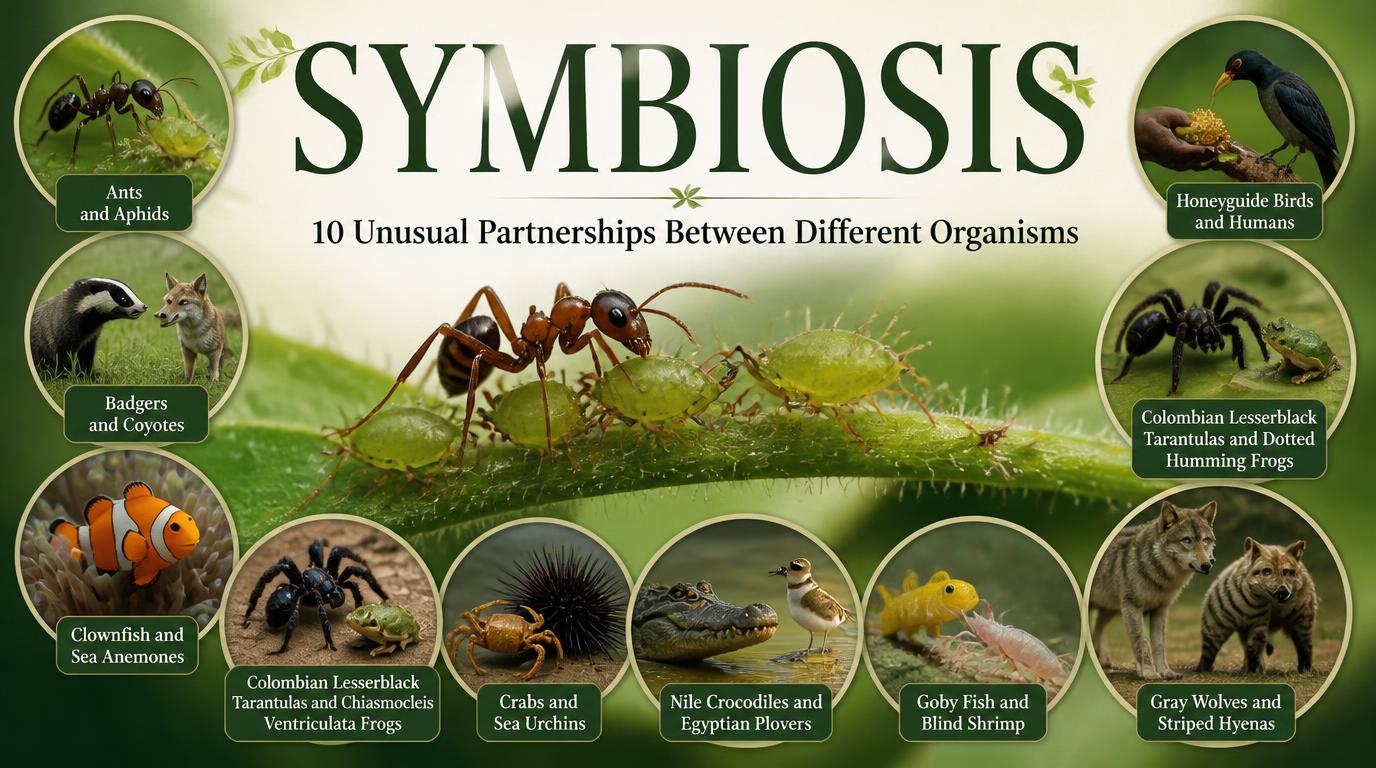
Symbiosis in nature can take some surprising forms. From ants protecting aphids in exchange for sugary honeydew to tiny fish teaming up with nearly blind shrimp, different organisms sometimes depend on one another to survive.
Some partnerships benefit both species, while others are more complicated. These ten examples reveal the remarkable ways living things interact in the wild.
1. Ants and Aphids
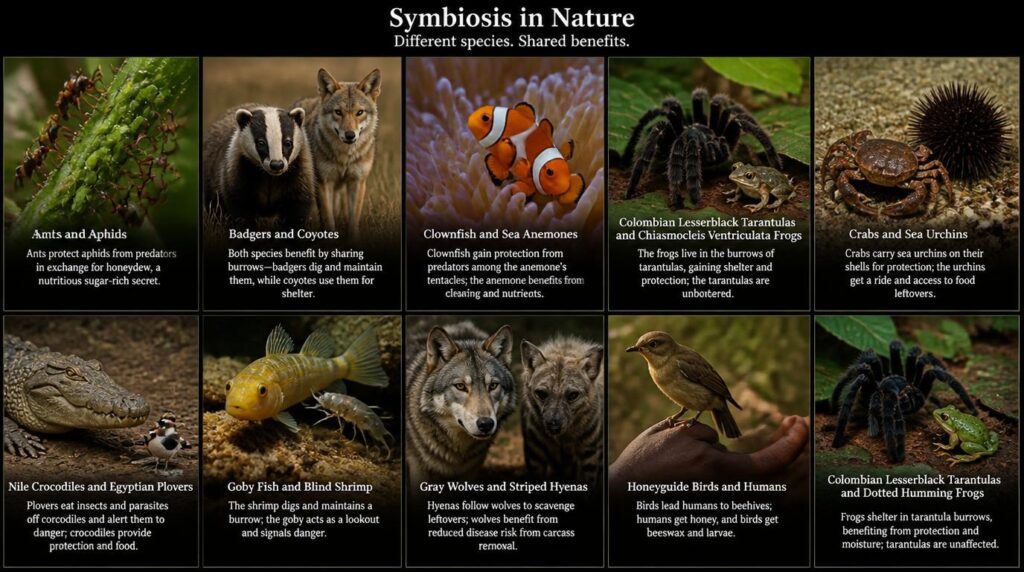
Ants and aphids have one of the best-known mutualistic relationships in nature. Aphids feed on plant sap and excrete a sugary liquid called honeydew, which ants eagerly consume.
In return, ants often protect aphids from predators such as ladybugs and other insects. The ants receive a reliable food source, while the aphids gain a measure of protection. This exchange can be observed in gardens, forests, and even on houseplants.
2. Badgers and Coyotes
Badgers and coyotes are both predators, but in parts of North America, they sometimes hunt together. Their different hunting strategies can make them an effective team.
Badgers are skilled diggers and can pursue prey into burrows, while coyotes are better suited to chasing animals across open ground. When they hunt together, prey escaping one predator may become vulnerable to the other.
This association does not always guarantee a benefit for both animals, but it demonstrates how different hunting abilities can complement one another.
You may also like: Creatures With More Than Two Eyes: Nature’s Incredible Visionaries
3. Clownfish and Sea Anemones
The relationship between clownfish and sea anemones is a classic example of mutualism. Anemones have stinging tentacles that deter many potential predators, yet clownfish can live among them thanks to protective adaptations in their skin and mucus.
The anemone provides the fish with shelter, while the clownfish may help defend its host, supply nutrients through its waste, and improve water circulation around it. The exact benefits vary by species and circumstances.
Together, these marine organisms demonstrate how two very different animals can develop a mutually beneficial relationship.
4. Colombian Lesserblack Tarantulas and Chiasmocleis Ventriculata Frogs
Some tarantulas share their burrows with tiny frogs belonging to the genus Chiasmocleis. Although a large spider might seem like an obvious threat to a small amphibian, this unusual association can benefit both.
The frog gains shelter and protection from certain predators. In return, it may eat ants and other small invertebrates that could threaten the tarantula’s eggs.
The spider appears to tolerate the frog in its burrow, allowing these unlikely partners to coexist. Their relationship is a striking example of how cooperation can occur between animals that seem like natural enemies.
5. Crabs and Sea Urchins
Some crabs carry sea urchins on their bodies, using the spiny animals as a form of mobile camouflage and defense. A predator may be less likely to attack a crab covered with sharp spines.
The sea urchin, meanwhile, may benefit from being transported to new feeding locations. However, the advantages depend on the species involved, and not every crab–urchin association is necessarily mutualistic.
This unusual partnership shows how one animal’s natural defenses can sometimes serve as protection for another.
You may also like: Recommended Books About Animals and Nature | Wildlife & Animal Guides
6. Nile Crocodiles and Egyptian Plovers
A familiar wildlife story describes Egyptian plovers entering the open mouths of Nile crocodiles to remove food debris from between their teeth. In this account, the birds receive a meal while the crocodiles benefit from having their teeth cleaned.
However, this famous story is not supported by reliable evidence. Egyptian plovers are not established as regular crocodile dental cleaners, so the relationship should not be presented as a confirmed example of mutualism.
The story remains popular, but it is important to distinguish wildlife folklore from documented animal behavior.
7. Goby Fish and Blind Shrimp
Certain gobies form partnerships with nearly blind or visually impaired snapping shrimp. The shrimp excavates and maintains a burrow that provides shelter for both animals.
Because the shrimp has poor eyesight, it relies on the goby to watch for danger. The fish stays close and signals an approaching threat, often through physical contact with the shrimp’s antennae. When danger appears, both retreat into the burrow.
The shrimp provides a safe home, and the goby acts as a lookout. This is a well-documented example of mutualism in marine ecosystems.
8. Gray Wolves and Striped Hyenas
Claims that gray wolves and striped hyenas routinely form hunting teams or accept one another into their packs are not well established. Although both are carnivorous mammals and may exploit similar food resources in some regions, that does not demonstrate a regular cooperative partnership.
Their interactions can vary depending on location, food availability, and competition. Without strong evidence of consistent mutual benefit, this pairing should be treated cautiously rather than as a confirmed example of symbiosis.
9. Honeyguide Birds and Humans
In parts of Africa, greater honeyguides can lead human honey hunters to wild bee nests. The birds use distinctive calls and movements to guide people toward a potential food source.
The humans locate the nest and collect honey, while the birds may gain access to beeswax and other edible remains after the nest has been opened. This relationship is especially well documented among the Hadza people of Tanzania.
It is a remarkable example of cooperation between humans and wild animals, with each partner contributing a different skill to the process.
10. Colombian Lesserblack Tarantulas and Dotted Humming Frogs
Some accounts describe dotted humming frogs living near tarantula burrows and protecting the spiders’ eggs from small predators. In return, the frogs may gain a safe refuge from their own predators.
This proposed relationship resembles the association between certain tarantulas and small Chiasmocleis frogs, but the exact species and details need to be verified before the pairing can be treated as a firmly established example.
If confirmed in a particular species, such an arrangement would illustrate how a small amphibian could benefit from the protection of a much larger spider while helping safeguard its eggs.
Why Symbiosis Matters
Symbiotic relationships show that survival in nature is not always a matter of competition. Some organisms exchange food for protection, others share shelter, and still others cooperate to locate resources.
Not every close association benefits both partners equally, and some popular stories about animal cooperation are less reliable than they first appear. Looking carefully at the evidence helps us appreciate the genuine complexity of life in the wild.