9 Hammerhead Shark Species Found in the Ocean
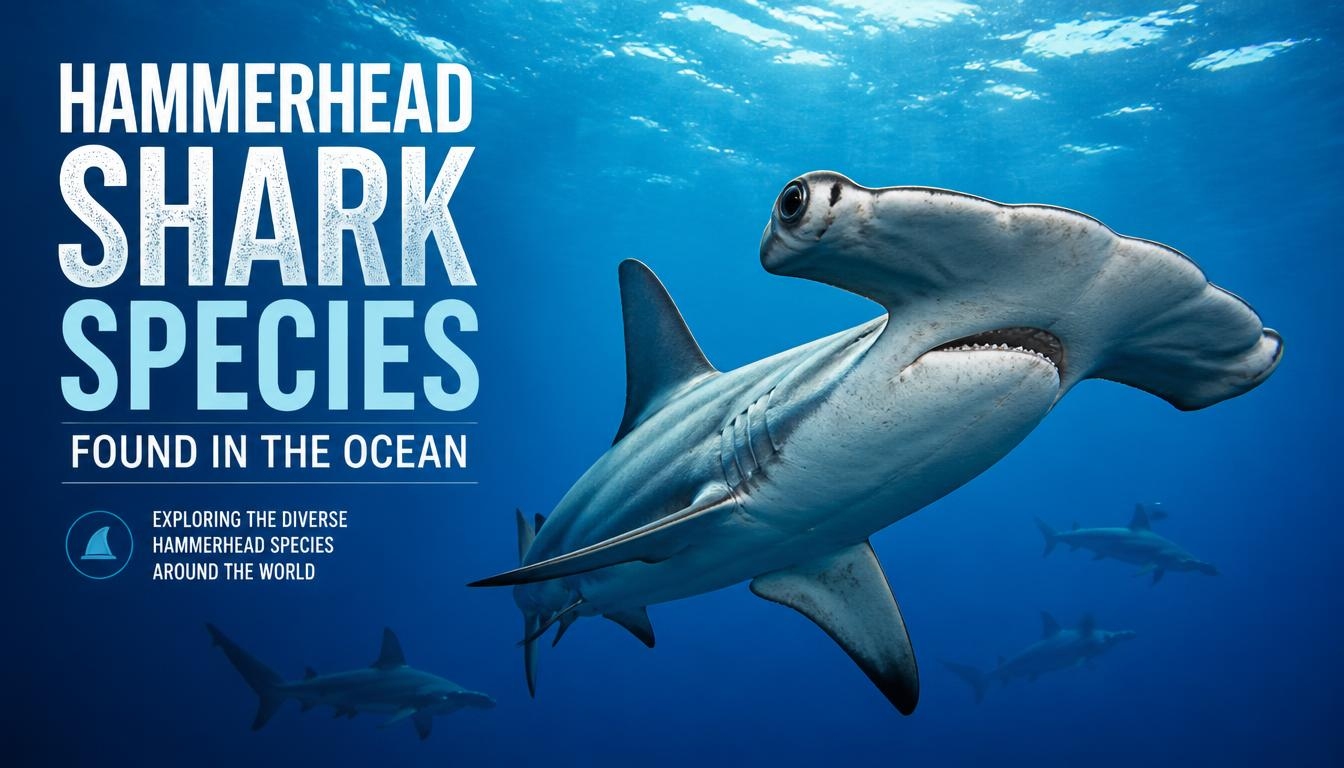
Hammerhead sharks are among the most unusual-looking fish in the ocean. Their distinctive head shape makes them easy to recognize, and different species can be found in warm waters around the world, particularly along coastlines and continental shelves.
One interesting feature of hammerhead behavior is that some species gather in schools during the day but hunt alone at night. Each species has its own size, appearance, habitat, and feeding habits.
Here are nine fascinating hammerhead sharks found in the ocean.
1. Bonnethead Shark
The bonnethead shark is one of the smallest members of the hammerhead family. It is also the only known omnivorous shark species, consuming both animal and plant material. Another unusual characteristic is that it is the only known shark species with sexual dimorphism in head morphology.
Unlike other hammerheads, the bonnethead does not have a straight head with sharply defined edges. Instead, it has a broad, smooth, shovel-shaped head. Its body can reach approximately 1.5 meters in length.
This species occurs along both sides of the Americas, in the Atlantic and Pacific Oceans. It is particularly common in the Gulf of Mexico and along the coastal waters of the western North Atlantic.
Bonnetheads inhabit continental and island shelves, river mouths, reefs, and shallow bays. These environments provide suitable feeding grounds where they spend much of the day searching for food. Crustaceans are their main food source, although they also consume seagrass.
This tropical shark prefers warm water and often swims in small groups of around five to 15 individuals. During migration seasons, however, much larger groups containing hundreds or even thousands of sharks may gather. During the breeding season, males and females tend to form separate groups. Females move into shallow water to give birth.
Bonnethead sharks are generally considered harmless to humans. They are shy animals that tend to avoid people, and the source reports only one unprovoked attack.
Read also: 10 Harmless Sharks You Can Safely Swim With
2. Carolina Hammerhead
Discovered as a distinct species in 2013, the Carolina hammerhead is among the more recently recognized shark species.
The first specimen was caught by Dr. Carter Gilbert, who initially believed it was a scalloped hammerhead. However, it took another 46 years to confirm that the shark represented a different species. The confusion arose because the Carolina hammerhead and scalloped hammerhead look remarkably similar.
Because it is a relatively newly described and rare species, scientists still have limited information about its biology and behavior.
An adult Carolina hammerhead can grow to approximately four meters in length. So far, its known range includes waters off the coast of the Carolinas in the western Atlantic, where it lives, reproduces, and gives birth.
Its diet consists mainly of bony fish and cephalopods. It also feeds on crabs, lobsters, shrimp, rays, and other sharks.
Despite being recognized relatively recently, the species is considered endangered. One of the threats it faces is fishing for its fins, which are used in shark fin soup.
3. Great Hammerhead
The great hammerhead is the largest species in the hammerhead family. It can reach approximately 6.1 meters in length, making it an impressive predator of warm coastal waters.
Its enormous size and almost straight, hammer-shaped head distinguish it from other members of the family. The head has a noticeable indentation in the middle, one of the features that helps identify this species.
Great hammerheads are apex predators with long, serrated teeth that help them capture and consume prey. Their heads also contain specialized electrical receptors that allow them to detect potential prey, even when it is buried beneath the sand.
Their diet includes cephalopods, crustaceans, rays, and other sharks. When hunting stingrays, great hammerheads use the sides of their broad heads to pin the rays down before feeding on their wings. They may also eat members of their own species when food is available.
Unlike some other hammerhead species, great hammerheads generally live alone. They inhabit warm coastal waters around the world, typically where water temperatures are approximately 20°C or higher.
Great hammerheads are viviparous, meaning they give birth to live young. Females can produce between six and 42 pups in a reproductive cycle that occurs approximately every two years. The species reaches sexual maturity relatively quickly, at around five to nine years of age.
If they avoid major threats, great hammerheads can live for up to 44 years or longer.
Despite their position near the top of the food chain, they are highly vulnerable to overfishing. They are caught commercially for their fins and are also taken as bycatch in fisheries targeting smaller fish.
Their large fins make them particularly valuable in the international shark fin trade. This pressure has contributed to the species’ endangered status.
4. Scoophead Shark
The scoophead shark is one of the rarer hammerhead species, and relatively little is known about its biology.
It is also sometimes called the crowned hammerhead because of its distinctive appearance. Its hammer-shaped head is moderately broad and elongated, with a widely curved front edge.
The scoophead is the smallest hammerhead species described in the source, reaching approximately 92 centimeters in length.
These sharks usually inhabit coastal areas with soft seabeds made up of gravel, mud, or sand. They prefer tropical and warm waters and can be found in different parts of the world.
One of their main known distribution areas is the eastern Pacific Ocean, from Mexico to Peru. They generally live at depths of around 100 meters, but they may also enter river mouths and mangrove habitats.
Their diet includes bony fish, cephalopods, crustaceans, echinoderms, and mollusks. Their curved mouths and broad head extensions help them crush hard-shelled prey such as crustaceans and mollusks.
Because of its low and declining population, the scoophead is considered threatened. Continued population declines could place the species at even greater risk in the future.
Read also: 9 Remarkable Fish That Can Breathe on Land
5. Scalloped Hammerhead
The scalloped hammerhead has a distinctive broad head with a series of indentations along its front edge. It is also known by names such as the kidney-headed shark and southern hammerhead.
These sharks can grow to approximately 3.5 meters in length. They are active predators that use their unusual head shape and highly developed sensory systems to locate prey.
Their widely spaced nostrils and eyes help them detect animals nearby. They also have specialized sensory cells that detect the electrical fields produced by other fish. These abilities allow them to locate prey even when it is buried beneath the sand.
In the past, scalloped hammerheads were known to gather in very large schools containing hundreds of adults. Such concentrations made them especially vulnerable to targeted fishing. Today, they may still form large groups, but they often spend much of their time alone.
Despite their generally shy nature, scalloped hammerheads can be potentially dangerous. Some individuals may behave aggressively, and divers who approach too closely may encounter threatening displays. In other situations, these sharks show no aggressive behavior at all.
Like many other hammerhead species, scalloped hammerheads are heavily affected by commercial fishing. Their fins and skins are valuable, making them vulnerable to targeted catches and overfishing. The species is currently considered endangered.
6. Caribbean Hammerhead
The Caribbean hammerhead is another species about which scientists still have much to learn.
It inhabits shallow, tropical coastal waters of the eastern and western Atlantic Ocean. Its head is moderately broad, with a curved front edge that resembles the shape of a scalloped hammerhead.
Other identifying characteristics include a widely curved mouth, a deeply concave anal fin, and a shorter snout than those of some other hammerhead species.
The Caribbean hammerhead can grow to approximately 150 centimeters in length.
Its diet includes flatfish, octopuses, squid, and small elasmobranchs, a group that includes sharks and rays.
This species is also a target of commercial fishing. Catches may be sold as fresh fish or processed into fishmeal, adding to the pressures on its populations.
7. Smalleye Hammerhead
The smalleye hammerhead is named for its relatively small eyes. It also has distinctive golden-yellow coloring on its fins, head, and sides.
The unusual yellow-orange pigments in its body may come from the penaeid shrimp that make up much of its diet when it is young. As the shark matures, its diet changes to include sea catfish and their eggs, although the pigmentation remains.
Its small eyes are thought to be an adaptation to life in murky coastal waters. This feature helps the shark function in its preferred environment without significantly affecting its vision.
The smalleye hammerhead usually reaches approximately 1.3 meters in length, making it one of the smaller members of the hammerhead family.
It is found in shallow coastal waters of the western Atlantic Ocean, particularly in muddy habitats. The species can also tolerate brackish water when necessary.
Its social behavior varies with age and sex. Adult males and juveniles may swim in groups, while adult females generally live alone.
The smalleye hammerhead is an important target of small-scale gillnet fisheries in parts of its range. Despite being shy and generally harmless to humans, it is frequently caught in commercial fishing nets.
Overfishing has contributed to population declines, and the species is currently considered endangered.
8. Smooth Hammerhead
The smooth hammerhead is one of the largest members of the hammerhead family after the great hammerhead. It can reach approximately five meters in length.
Its broad, rounded head provides an unusually wide field of vision. The position of its eyes also helps the shark monitor its surroundings and judge distances while moving through the water.
Smooth hammerheads are active predators that feed on a wide variety of marine animals. Their diet includes bony fish, invertebrates, rays, other sharks, cephalopods, crustaceans, and even sea snakes.
These sharks inhabit temperate waters around the world, particularly in middle latitudes.
Smooth hammerheads can be potentially dangerous to humans. Several attacks have been recorded, including two fatal incidents, according to the source.
Their fins are highly valued in the shark fin trade, making the species vulnerable to overfishing. Fishermen also catch them for their meat, which may be sold fresh, dried, salted, or smoked. However, reports of poisoning associated with shark meat have also been documented.
Other parts of the animal are used commercially. Its liver oil may be processed for vitamins, while by-products can be turned into fishmeal. Its skin and other body parts also have various uses, including in traditional Chinese medicine.
9. Winghead Shark
The winghead shark has a slender body and an exceptionally broad head. Its head extensions can account for almost half of its total body length, making it one of the most unusual-looking members of the hammerhead family.
Although its appearance may seem strange compared with other sharks, this distinctive head shape provides important advantages in the water.
The wide spacing between its eyes gives the winghead shark impressive binocular vision. It also has extremely long nostrils, which help it detect and track scents more effectively.
This species inhabits shallow coastal waters of the central and western Indo-Pacific region. Its diet consists mainly of bony fish, cephalopods, and crustaceans.
Winghead sharks are considered harmless to humans, but human activities pose a serious threat to their survival. They are caught not only for their fins but also for their liver oil and meat, which may be used for food or processed into fishmeal.
The species has been listed as endangered since 2016, largely because of excessive fishing pressure.