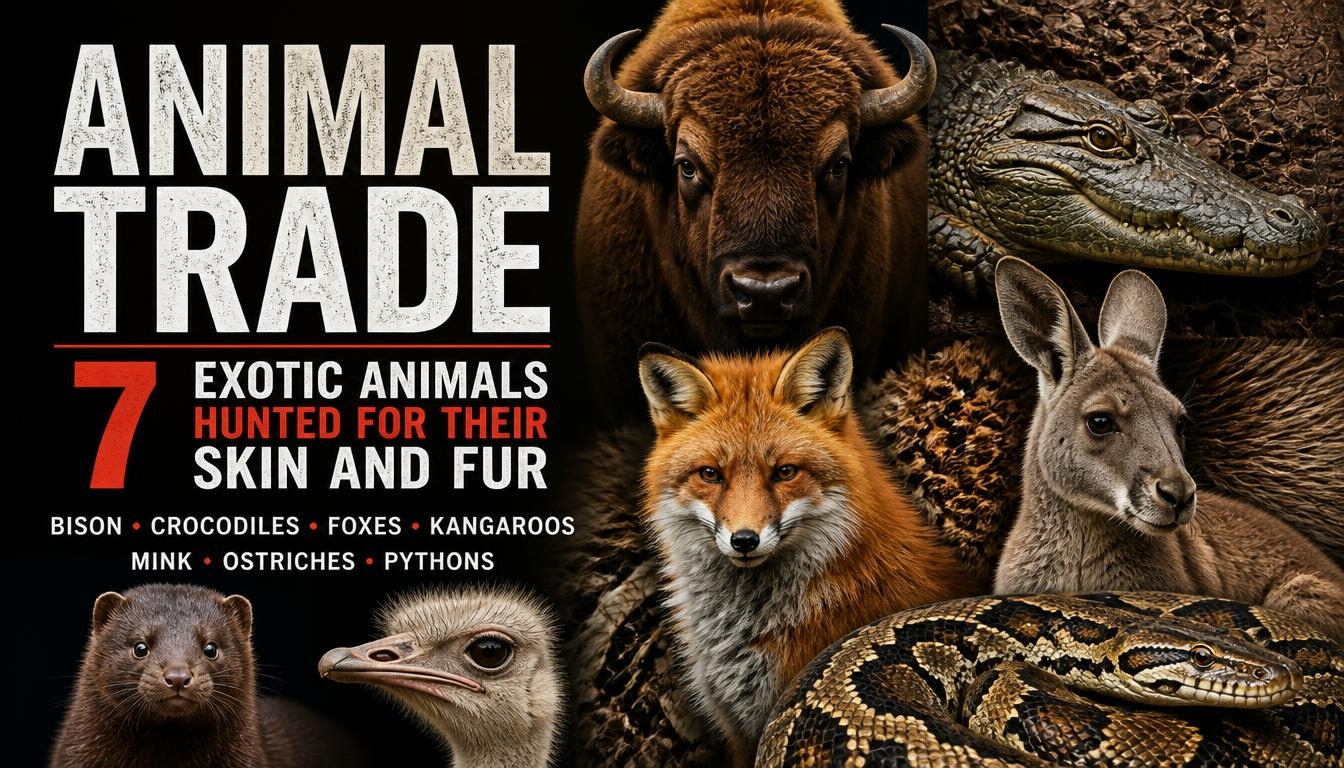
Animal Trade: 7 Exotic Animals Hunted for Their Skin and Fur
Animal skins and fur have been used for centuries to make clothing, accessories, and luxury goods. Today, demand for exotic leather and fur continues to raise concerns about animal welfare, wildlife conservation, and the sustainability of the fashion industry.
From crocodile leather handbags to python-skin accessories, many products come from animals whose skins are valued for their texture, durability, or appearance. Some species are farmed for commercial use, while others are harvested from the wild. The impact varies depending on the species, the source, and how the trade is regulated.
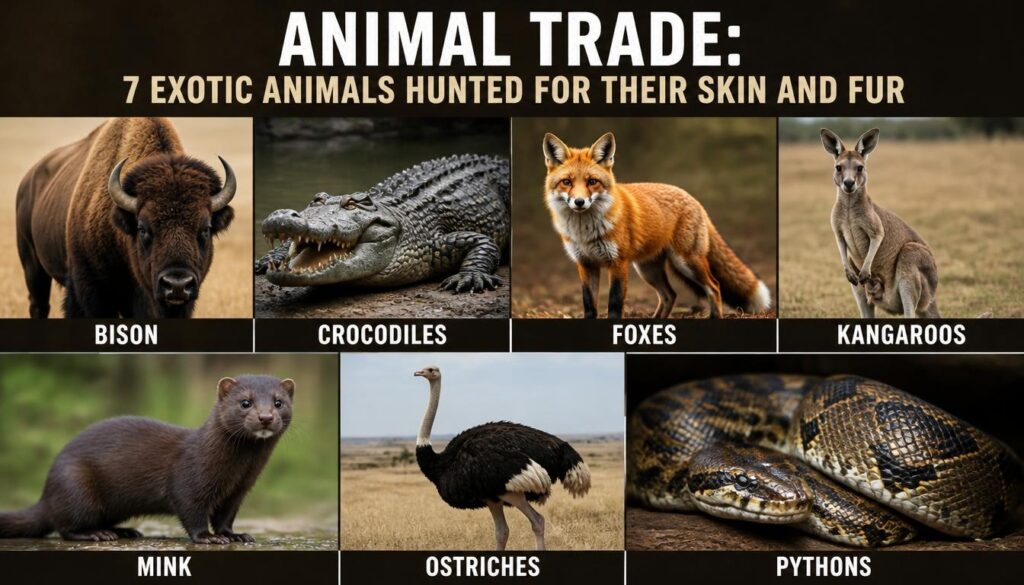
Here are seven animals whose skins or fur have played a significant role in the global fashion and leather industries.
1. Bison
North American bison once numbered in the millions, but commercial hunting and other pressures caused their populations to collapse during the nineteenth century. Their hides were highly valued for clothing, robes, and other practical goods.
Indigenous peoples had long used bison for far more than their hides. Meat provided food, while bones and horns could be fashioned into tools and other objects. Sinews were useful for cordage, and other parts of the animal had practical uses as well.
The expansion of commercial hide hunting contributed to the devastating decline of bison populations. Conservation efforts later helped the species recover, although American bison still face management and conservation challenges in some areas. Bison leather continues to be used for products such as bags, belts, and footwear.
You may also like: Hyrax: 18 Fascinating Facts About This Remarkable Animal
2. Crocodiles
Crocodile leather is prized in the luxury goods industry for its distinctive scale patterns and durability. It is used to manufacture handbags, belts, wallets, shoes, and other accessories.
Commercial hunting placed considerable pressure on several crocodilian populations during the twentieth century. In response, some countries introduced stricter protections and developed regulated farming and ranching programs. Today, the trade in many crocodilian species is controlled under international wildlife-trade rules, including CITES.
Saltwater crocodile and Nile crocodile skins are among those used in the leather industry. The quality and appearance of the finished leather depend on factors such as the species, the part of the hide, and how it is processed.
Crocodile farming can supply some of the market, but it raises questions about animal welfare, traceability, and whether commercial production supports or undermines conservation. Responsible oversight is essential to prevent illegal trade and protect wild populations.
3. Foxes
Fox fur has long been used to make coats, collars, scarves, and other fashion accessories. Its soft texture and insulating properties have made it popular in parts of the fur industry.
Foxes used for fur may be raised on farms or obtained through trapping and hunting, depending on the country and local regulations. Fur farming has attracted criticism from animal-welfare organizations because animals kept in confined conditions may experience stress and develop abnormal behaviors.
The methods used to kill foxes for fur have also been a source of controversy. Animal-welfare standards and regulations differ between jurisdictions, and practices in the industry are not uniform.
As public concern about animal welfare has grown, some fashion brands and retailers have stopped using real fur. Synthetic alternatives are increasingly available, although their environmental impacts also depend on the materials and manufacturing processes involved.
4. Kangaroos
Kangaroo leather is known for its relatively low weight and tensile strength. It has been used in footwear, gloves, wallets, bags, and certain sporting goods.
Australia regulates the commercial harvesting of specified kangaroo species through management programs that set quotas and other conditions. Supporters argue that regulated harvesting can be sustainable when populations are monitored appropriately. Critics raise concerns about animal welfare, the killing of dependent young, and the effects of commercial hunting.
Kangaroo leather has also been used in some football boots and other athletic footwear. However, it would be inaccurate to assume that every major sportswear brand uses it in the same way or that its use is consistent across all product lines.
The debate surrounding kangaroo products reflects a broader question in wildlife management: how should commercial use be balanced against conservation, animal welfare, and public opinion?
5. Mink
Mink fur has been used in coats, jackets, scarves, trims, and other luxury accessories for generations. The dense underfur provides insulation, while the glossy outer coat gives the material its characteristic appearance.
Although mink occur naturally in the wild, much of the fur historically sold by the fashion industry has come from farmed American mink. Fur farming has been concentrated in several countries, though the industry’s size and location have changed over time as regulations and consumer preferences have shifted.
Keeping mink in captivity has raised animal-welfare concerns because they are active, semi-aquatic predators with complex behavioral needs. Critics argue that conventional cages do not provide sufficient opportunities for natural behaviors.
The cost of mink garments varies considerably according to the amount and quality of fur, the design, and the brand. Some fashion houses have abandoned fur, while others continue to sell it in certain markets.
6. Ostriches
Ostrich leather is valued for its distinctive texture, including the raised marks associated with feather follicles. It is used in luxury handbags, boots, belts, wallets, and other accessories.
South Africa has been an important center of commercial ostrich farming and leather production. Ostriches may be raised for several products, including meat, feathers, and hides, making the industry different from businesses focused exclusively on fur.
Animal-welfare concerns can arise during transport, handling, and slaughter. Conditions vary between facilities, and welfare outcomes depend on how animals are managed and whether relevant standards are enforced.
Ostrich leather has traditionally been marketed as a premium material because of its distinctive appearance and processing requirements. Its use is not limited to fashion: specialized upholstery and other leather applications are also possible.
As with other exotic leathers, evaluating the industry requires attention to animal welfare, production practices, traceability, and the legal requirements governing the trade.
7. Pythons
Python skin is used to make luxury handbags, shoes, belts, wallets, and other fashion accessories. Its patterned scales make it a recognizable material in the exotic-leather market.
The international trade in python skins has involved large numbers of animals, particularly in Southeast Asia. Some python species are subject to international trade controls under CITES, which regulates cross-border commerce to help ensure that trade does not threaten their survival.
Illegal harvesting and weak enforcement can make it difficult to establish where skins originate and whether they were obtained lawfully. Animal-welfare groups have also documented concerns about the methods used to capture and kill snakes for their skins.
Practices differ by location and supplier, so it is important not to assume that every python skin is illegally sourced or that all animals are killed using the same method. Nevertheless, traceability and humane handling remain significant challenges for the exotic-skin industry.
Animal Trade Today
The market for animal fur and exotic leather continues to generate debate about conservation, animal welfare, and the environmental costs of producing fashion goods.
Some designers and retailers have stopped using real fur, while others continue to work with animal-derived materials. Alternatives include synthetic leather, plant-based materials, and recycled textiles, although each option has its own environmental trade-offs.
Consumers can make more informed decisions by checking product labels, researching a brand’s sourcing policies, and looking for credible information about animal welfare and legal compliance.
Ultimately, reducing the harm associated with animal-product industries requires transparent supply chains, effective wildlife-trade enforcement, and careful consideration of the materials used in everyday and luxury products.