10 Tree and Plant Diseases: Common Infections That Can Damage Gardens and Forests
Trees and plants can suffer from many different diseases. Some infections spread through airborne spores, while others move through soil, water, insects, or contact between roots. Depending on the disease, symptoms may include discolored leaves, damaged fruit, dying branches, or decaying roots and trunks.
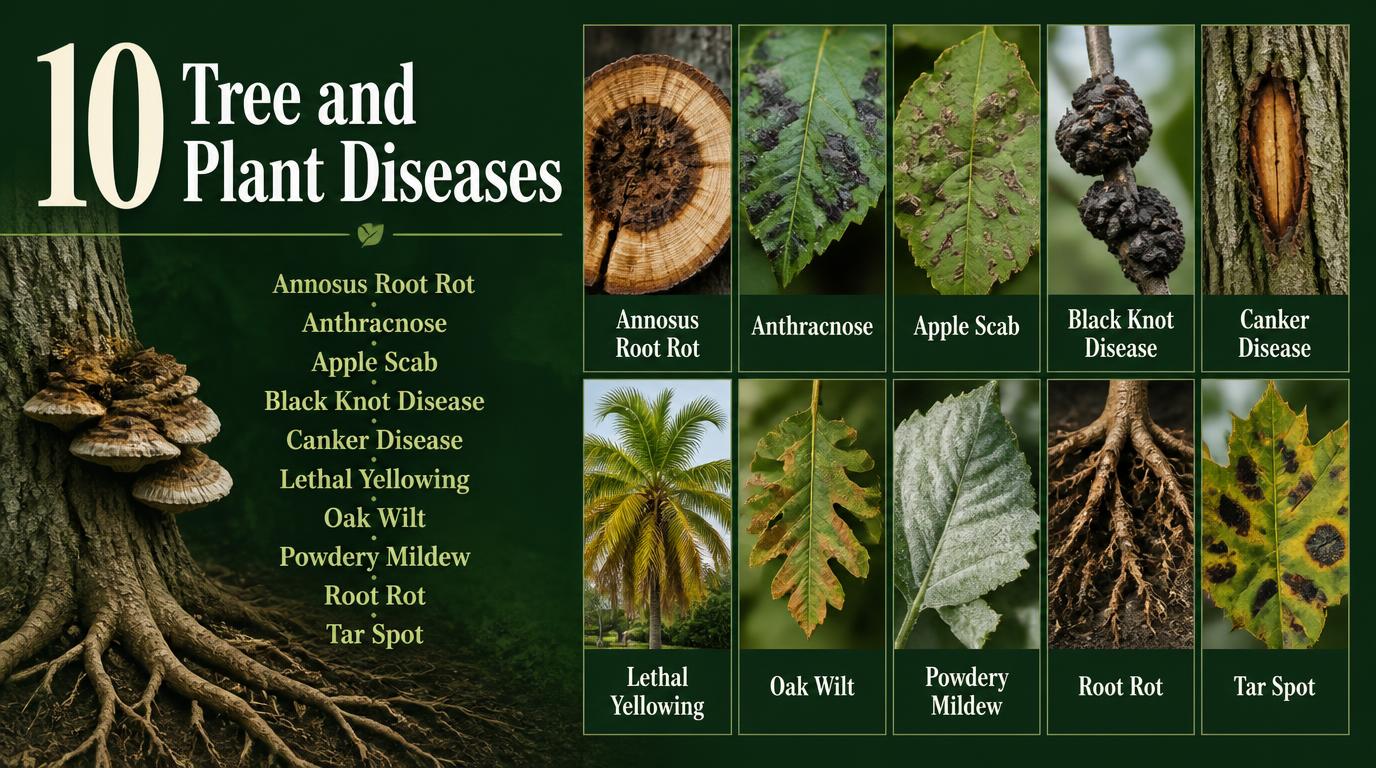
This article explores ten diseases and disease-related problems that affect trees and plants, from fungal infections such as anthracnose and oak wilt to lethal yellowing in palms. Although the original title refers to viruses, most of the conditions described here are caused by fungi or other pathogens, not viruses.
1. Annosus Root Rot
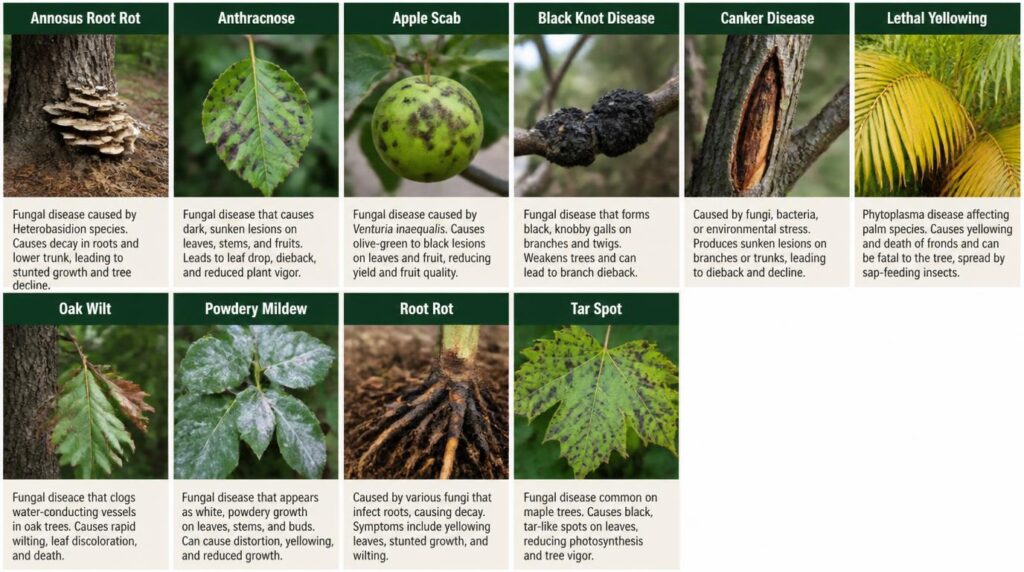
Annosus root rot is a fungal disease with a wide range of host trees. It is often associated with deep, sandy soils and areas that were previously used for agriculture. The fungus produces spores that can travel through the air and enter a tree through wounds.
After entering the tree, the fungus can grow through the wood and reach the roots, where it causes decay. It can also spread between neighboring trees when their roots come into contact. This means that a single infection may gradually affect several trees in the same area.
Symptoms include crown dieback, thinning foliage, and yellowing leaves. Infected roots may release resin, while weakened roots become more vulnerable to breaking. As the disease advances, the wood can become soft, spongy, or stringy. Some infected trees may survive for years, even as the disease continues to damage their root systems.
2. Anthracnose
Anthracnose is a group of fungal diseases that affect a wide variety of plants, trees, and shrubs. It is often seen in spring, when cool and rainy weather creates favorable conditions for infection. The disease can also occur on greenhouse crops, potted plants, tropical foliage, and ornamental trees growing outdoors.
The fungi produce spores that can spread to leaves and twigs. They may also survive in infected plant debris, allowing the disease to return in later growing seasons. Warm, dry weather can slow its development, but the infection may become active again when conditions turn cool and wet.
Anthracnose can be recognized by dark, sunken lesions that may contain small brown spots. These marks can appear on leaves, flowers, fruit, stems, and branches. The disease is not always fatal, but it can damage many kinds of plants, including fruit trees, vegetables, grasses, shrubs, and ornamental trees.
Good garden sanitation and appropriate pruning can help reduce the spread of infection. Keeping plants healthy with suitable light, water, and nutrients may also help them tolerate disease pressure.
You may also like: Nature’s Fire Survivors: Trees That Withstand Wildfires
3. Apple Scab
Apple scab is a fungal disease that primarily affects apple trees. It can also infect related plants, including hawthorn, quince, and blackthorn. The disease is especially common in cool, damp weather, so infections often develop during spring and early summer.
The longer leaves remain wet, the more favorable conditions may be for the fungus. Apple scab occurs in apple-growing regions around the world and can affect both leaves and fruit.
Early symptoms on leaves often appear as olive-green or pale-yellow spots on the upper surface, with darker, velvety patches underneath. As the infection develops, the spots can enlarge. Heavily affected leaves may shrivel, curl, and fall from the tree early in the season.
Fruit can develop sunken, brown, corky lesions. As these marks grow, the apples may become misshapen and sometimes fall before they ripen. The disease spreads when spores are carried by rain, wind, or splashing water onto leaves, flowers, and fruit.
Removing infected fallen leaves and clearing debris from beneath trees can help reduce the amount of fungal material available to cause new infections. Regularly inspecting apple trees also makes it easier to notice symptoms early.
4. Black Knot Disease
Black knot is a widespread fungal disease that affects fruiting and ornamental cherry and plum trees. It can develop slowly, sometimes remaining unnoticed before the characteristic growths become visible.
The disease produces hard, irregular, black swellings called galls on branches and twigs. The fungus can survive the winter in these galls and release spores when conditions are suitable. Spores may infect young shoots, particularly when moisture is present.
As the galls grow, they can constrict branches and interfere with the movement of water and nutrients. Infected branches may become weak, and new growth can be stunted or die. Severe infections can reduce fruit production and may eventually cause parts of the tree to decline.
Galls can also create damaged areas that provide entry points for insects and other plant pathogens. Some trees tolerate a number of galls with relatively little visible harm, while heavily infected trees may suffer extensive branch dieback.
Management usually involves removing infected branches, choosing suitable tree varieties and planting sites, and using fungicides when appropriate. The best approach depends on the tree’s condition and the severity of the infection.
5. Canker Disease
Canker is a general term for areas of damaged or dead tissue on a tree’s bark, branches, or trunk. Some cankers are caused by fungi, while others may develop after environmental stress, chemical exposure, insect activity, or mechanical injury.
Cankers often appear as oval or sunken lesions on the bark. As the damage progresses, the affected tissue may die, and the injury can spread into nearby parts of the tree. A serious canker can weaken a branch or trunk and make the tree more vulnerable to wind damage, insects, and other diseases.
Trees already under stress may be less able to limit the damage. Young fruit trees can be particularly vulnerable and may have difficulty recovering from severe infections or injuries.
Reducing stress is an important part of prevention. Choosing tree species that are suited to the local climate, soil, and sunlight conditions can help them remain healthy. Pruning during dry weather and removing affected material may also help limit the spread of some canker diseases. The appropriate treatment depends on the cause of the canker.
6. Lethal Yellowing
Lethal yellowing is a serious disease that affects several species of palm, including coconut palms. It is associated with a phytoplasma, a microscopic organism that can be transmitted from one plant to another by insect vectors.
One early sign of the disease may be the premature dropping of both immature and mature coconuts. The flower stalks may then turn dark, followed by yellowing leaves. The discoloration can spread through the crown as the disease progresses.
In advanced cases, the leaves deteriorate and the growing point dies. Eventually, the crown may collapse, leaving a bare trunk standing. Once the growing point has died, the palm cannot recover.
The disease can kill an affected palm within months of the first visible symptoms. There is no cure for a palm that has developed lethal yellowing, so monitoring and early detection are important for managing the disease and reducing its spread.
7. Oak Wilt
Oak wilt is a destructive fungal disease that affects oak trees. Different oak species vary in their susceptibility: red oaks are particularly vulnerable, while many white oaks are more resistant.
The fungus interferes with the tree’s water-conducting system, causing leaves to wilt and the tree to decline. The disease can spread from one oak to another through connected or grafted roots. This allows the infection to move between neighboring trees and potentially affect a larger area.
Oak wilt can also spread over longer distances when insects carry fungal spores to fresh wounds on healthy trees. Sap-feeding beetles are among the insects associated with this type of transmission.
Because the disease can move through connected root systems, an infection may affect several trees in the same area. Oak wilt can be difficult and costly to manage, making early identification and appropriate local guidance important.
8. Powdery Mildew
Powdery mildew is a common fungal disease that affects a wide range of garden plants. There are many different powdery mildew fungi, and individual types tend to infect particular host plants. Commonly affected plants include pumpkins, beans, and members of the nightshade family.
The disease often appears as a pale, powdery coating on the surface of leaves. Spores can be carried by wind from an infected plant to nearby healthy plants. If powdery mildew has been present in a garden before, it may return in later growing seasons.
Unlike many fungal diseases, powdery mildew can thrive in warm, relatively dry conditions. It can also be more severe on plants growing in shady locations than on those receiving plenty of sunlight.
The infection can reduce the growth and quality of affected plants. In severe cases, it may lower the quality or yield of flowers and fruit. Providing adequate sunlight and airflow, maintaining healthy growing conditions, and using fungicides when necessary can help manage the disease.
9. Root Rot
Root rot is a general term for diseases that cause plant roots to decay. It is often associated with fungi or fungus-like organisms that thrive in wet soil and can spread through poorly drained areas of a garden.
Because the damage occurs underground, root rot can be difficult to recognize at first. An infected plant may look as though it is suffering from drought or nutrient stress, even when it receives regular care. Damaged roots cannot absorb water and nutrients properly, which can lead to wilting, poor growth, and signs of mineral deficiency.
Trees can also develop root rot, and severe root damage may leave them more vulnerable to other problems. When a plant shows signs of decline despite suitable care, checking its roots can help reveal the cause.
If some roots are still firm and healthy, the plant may be saved by removing damaged parts and moving it into fresh soil with good drainage. If most of the root system has become soft and decayed, recovery may no longer be possible. Avoiding excessive watering and improving soil drainage can help reduce the risk of root rot.
10. Tar Spot
Tar spot is a fungal leaf disease that affects several species of maple, including trees commonly found in Canada. It usually begins as small, raised black spots on the leaves. As the infection develops, the spots may grow into larger dark lesions, sometimes with a pattern resembling a fish eye.
The fungi can survive the winter in fallen leaves. In spring, they produce spores that can infect new foliage. Tar spot is generally a cosmetic problem, and many affected trees remain otherwise healthy.
Collecting and properly disposing of infected fallen leaves can reduce the amount of fungal material around the tree and may help limit future infections.