Gerenuk: The Long-Necked Member of the Gazelle Family
When people think of animals with exceptionally long necks, giraffes usually come to mind first. However, the gerenuk is another remarkable example. Often called the giraffe gazelle, this unusual antelope is known for its slender build, elongated neck, and ability to reach leaves that many other grazing animals cannot access.
Native to East Africa, the gerenuk has developed distinctive physical features and feeding habits that help it survive in dry environments. Here are some fascinating facts about this long-necked antelope.
Appearance
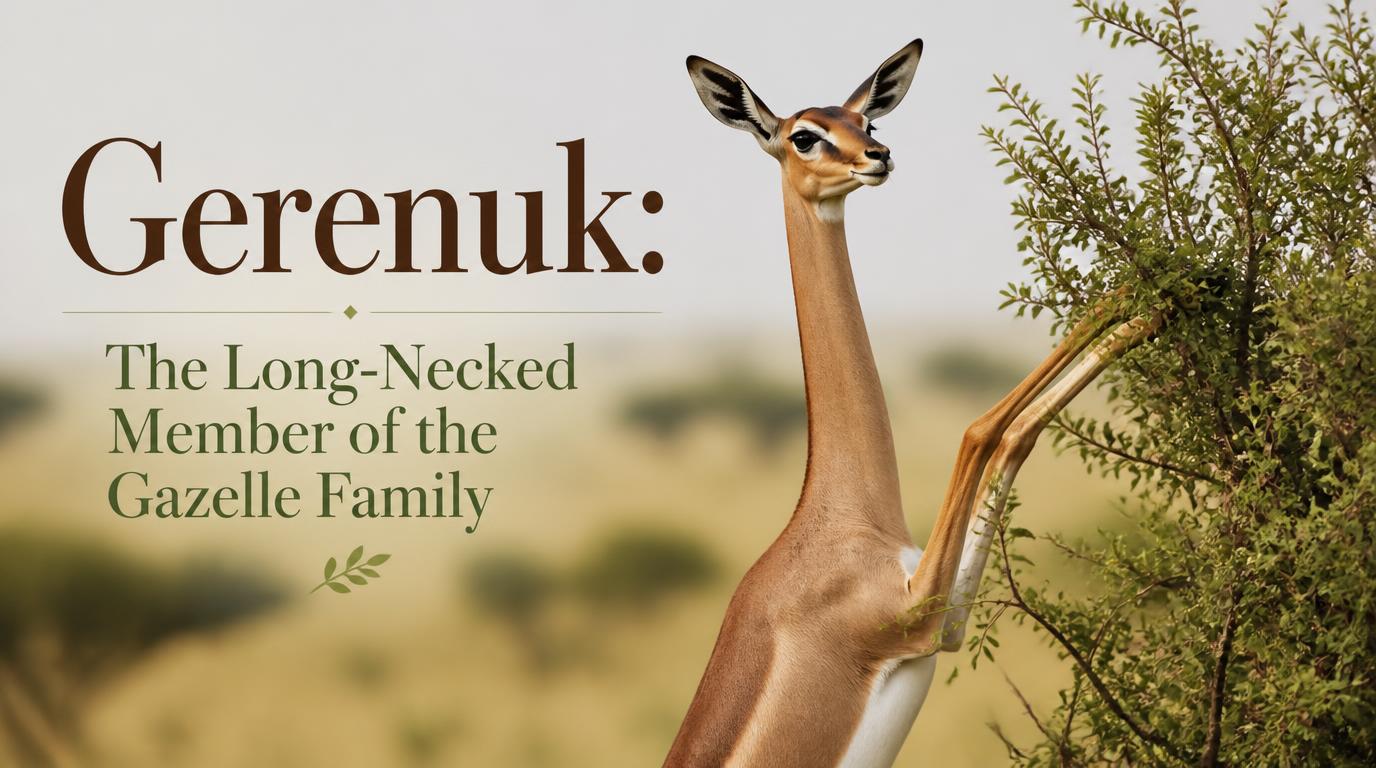
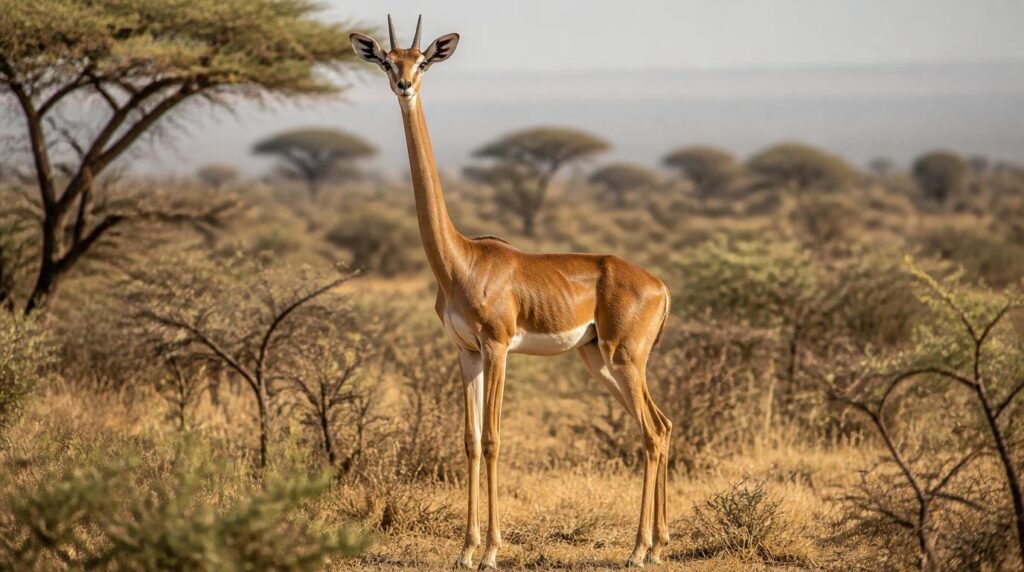
The gerenuk looks like a combination of two different animals: a slender antelope with a neck that resembles a miniature giraffe’s. Its unusual proportions make it easy to recognize in the wild.
It has a small head, large eyes, and prominent ears that point upward. In front of its eyes are preorbital glands that produce a resin-like secretion used for scent marking. Gerenuks also have distinctive facial expressions, sometimes appearing curious as they extend their tongues while feeding.
Females are smaller than males and lack horns. Males, by contrast, have S-shaped horns that curve backward and typically measure around 25–44 centimeters (10–17 inches) long.
Gerenuks stand approximately 80–100 centimeters (31–39 inches) tall at the shoulder. Their long necks help them reach foliage high above the ground, while their slender legs allow them to stand upright and access plants that are beyond the reach of many other antelopes.
When feeding, a gerenuk can stretch upward to reach vegetation as high as approximately two meters (6.5 feet). Scent glands near the knees and between the toes also help these animals mark their territories.
Their coats are usually light brown or reddish-brown, with a white underside and a black tuft at the end of the tail. This coloration helps them blend into the dry scrubland and bushland where they live.
You may also like: 10 Harmless Yet Terrifying-Looking Animals
Behavior
Adult male gerenuks are generally solitary outside the breeding season. Younger males sometimes form bachelor groups before dispersing to establish their own territories. Males mark their territories with scent secretions, communicating their presence to other individuals.
Females, on the other hand, often form small groups of around 10 related individuals. Living in groups allows them to remain alert to potential predators and benefit from one another’s vigilance.
Gerenuks are primarily active during the day. They are shy animals that often respond to disturbances by standing still, relying on their camouflage to avoid detection. They also communicate through several vocalizations, including buzzing sounds, loud bleats, and whistles. These calls can signal alarm, danger, or irritation.
Female gerenuks are attentive mothers. After a gestation period of approximately seven months, a female typically leaves her group to give birth in a secluded location. She and her newborn remain hidden for a period while the young animal grows stronger.
The mother cleans her newborn soon after birth and returns regularly to nurse it. She also removes waste from the immediate area, which may help reduce scents that could attract predators. Quiet bleating sounds allow her to communicate with and reassure her calf.
As the young gerenuk grows, it gradually becomes more independent and eventually rejoins the group with its mother.
Diet and Habitat
Unlike many antelopes that spend much of their time grazing on grasses, gerenuks are specialized browsers. They often stand on their hind legs, sometimes bracing their front legs against tree trunks or branches, to reach leaves growing above the ground.
Their diet includes acacia leaves and other thorny vegetation, as well as buds, flowers, and fruits. Their long necks and legs provide access to a wide variety of plants, including foliage that other herbivores may be unable to reach.
Gerenuks obtain much of their moisture from the plants they eat and can survive for long periods without drinking free-standing water. This adaptation is particularly useful in the arid regions of East Africa, where water can be scarce.
They feed on a broad range of plant species, helping them adapt to changing conditions in their dry habitats.
Gerenuks are native to the Horn of Africa and neighboring parts of East Africa. Their range includes Ethiopia, Eritrea, Kenya, Somalia, and Tanzania. They inhabit dry savannas, open plains, thornbush scrub, and areas with scattered trees and shrubs.
Their populations are especially associated with the drier landscapes of eastern Africa, where their specialized feeding behavior gives them access to food resources unavailable to many other herbivores.
Predators and Threats
Gerenuks face threats from a range of predators, including lions, leopards, cheetahs, hyenas, African wild dogs, and other carnivores. Young animals are particularly vulnerable, and large birds of prey may occasionally target small or weakened calves.
When danger approaches, a gerenuk may freeze rather than immediately flee. Remaining motionless can make it harder for a predator to detect the animal, although this strategy does not always work.
Human activities pose an additional threat. Habitat loss and fragmentation caused by expanding settlements, agriculture, roads, and other development reduce the amount of suitable land available to gerenuks. These changes can restrict access to food, shelter, and potential mates while increasing exposure to predators and human-related dangers.
Gerenuks are classified as Near Threatened on the IUCN Red List, rather than Endangered. Their populations face ongoing pressure, and continued habitat protection and conservation efforts are important for their long-term survival.
Their unusual body proportions, specialized browsing behavior, and ability to thrive in dry environments make gerenuks one of East Africa’s most distinctive antelopes.