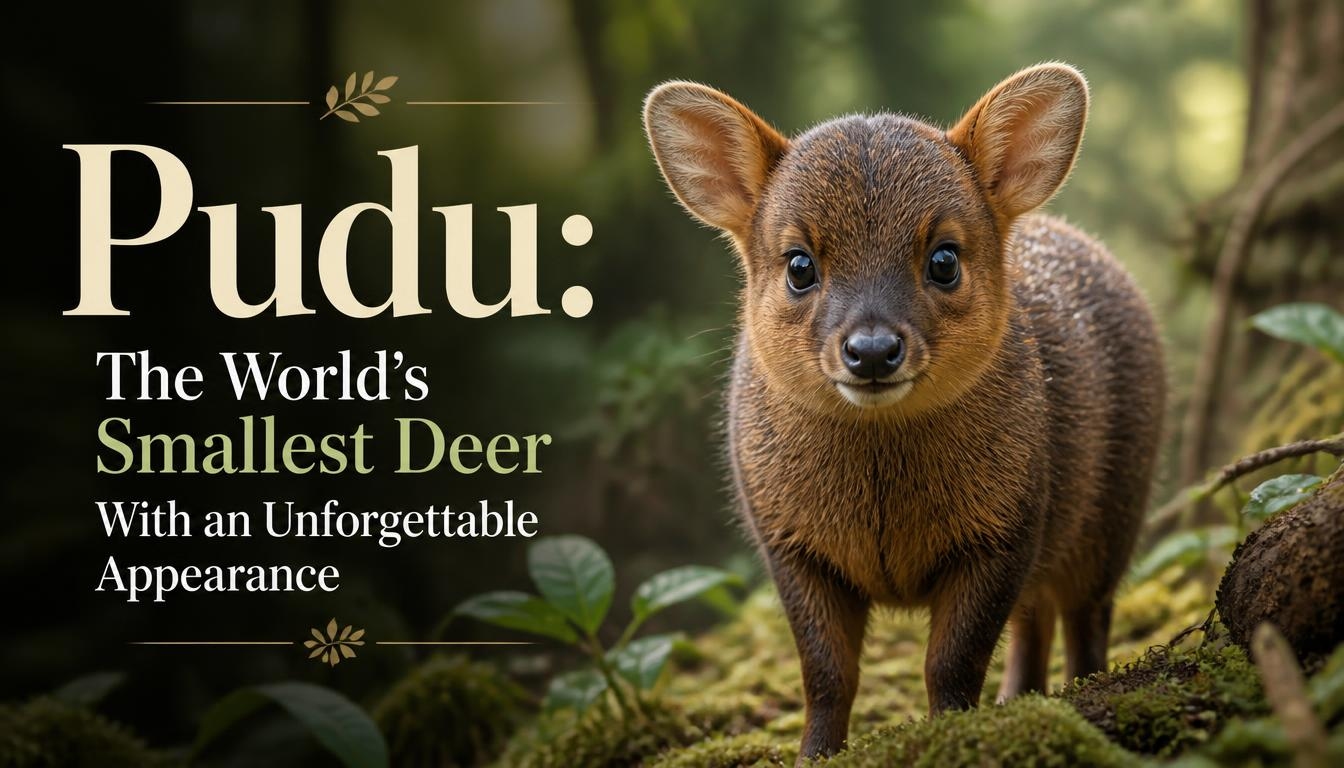
Pudu: The World’s Smallest Deer With an Unforgettable Appearance
The pudu is the smallest deer in the world, famous for its tiny body, short legs, and adorable face. At first glance, this miniature deer can look like a cross between a fawn and a small dog. Its compact size and alert expression have made it a favorite among wildlife enthusiasts.
There are two recognized species: the northern pudu and the southern pudu. Both live in South America, where dense forests provide food and shelter from predators.
Here are some fascinating facts about these remarkable little deer.
Appearance
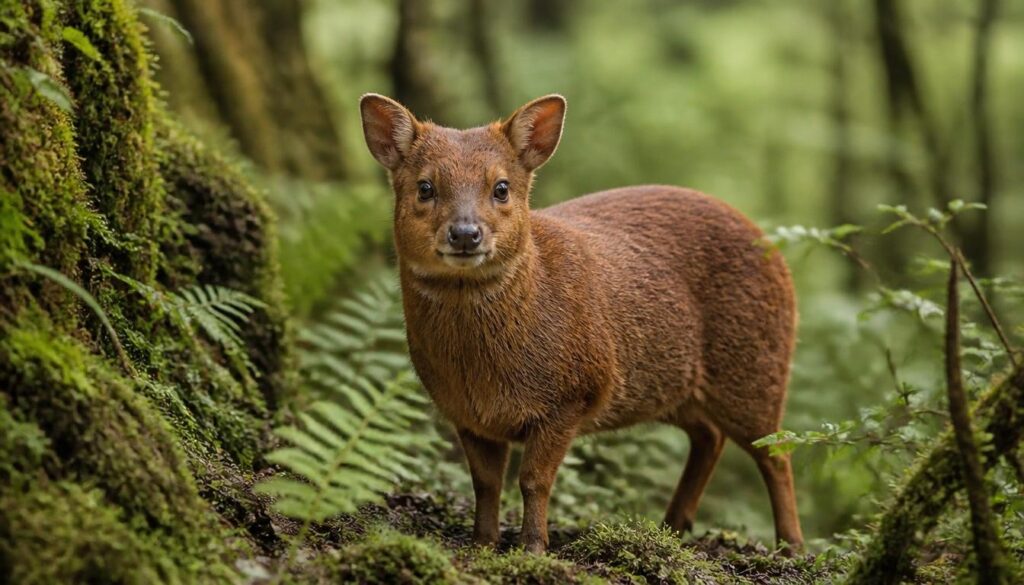
Pudus are exceptionally small deer, with adults generally standing around 32–44 centimeters (13–17 inches) tall at the shoulder, depending on the species. They have stocky bodies, short legs, and a small tail.
Their coats range from reddish-brown to dark brown, helping them blend into the forest understory. Male pudus grow short, pointed antlers, which they shed and regrow each year. Females do not have antlers.
Despite their small size, pudus have strong hind legs that help them run, jump, and maneuver through thick vegetation. Their compact build is well suited to life in dense forests, where quick movements and camouflage can help them avoid danger.
You may also like : 11 Animal Fathers That Go Above and Beyond for Their Young
Behavior
Pudus are generally solitary and cautious animals. They may be active during the day or at night, depending on local conditions, and often spend time feeding, resting, and grooming. Occasionally, individuals may be seen in pairs, particularly during breeding or when a mother is raising a fawn.
These little deer are territorial and use scent marking to communicate. They may repeatedly use particular areas for defecation, which can also help mark their territory.
When threatened, pudus can move quickly through dense vegetation. They may run in changing directions, leap over obstacles, and use the forest’s cover to escape predators. Their small size does not make them defenseless, but they rely heavily on avoiding detection.
Pudus breed seasonally, although the timing varies with species and location. After a gestation period of roughly seven months, a female typically gives birth to a single fawn. The mother raises the young on her own until it becomes more independent.
The southern pudu can live for many years, although lifespan varies between individuals and conditions in the wild or in human care. Despite their appealing appearance, pudus are wild animals rather than naturally domesticated pets. They are generally shy and do not seek close interaction with people.
Diet and Habitat
Pudus are herbivores that feed on a variety of plants available in their forest habitats. Their diet may include leaves, grasses, ferns, shoots, fruits, berries, and other vegetation. They browse at different heights and can take advantage of the diverse plant life found in dense undergrowth.
The two pudu species occupy different parts of the Andes and surrounding regions. Northern pudus occur in the northern Andes, while southern pudus inhabit temperate forests farther south, particularly in Chile and parts of Argentina.
They favor habitats with dense vegetation, including temperate rainforests, bamboo thickets, and areas with thick understory. Such environments offer both food and concealment from predators.
Pudus obtain some of their moisture from the plants they eat, but this does not mean they never need access to water. Their water requirements depend on their diet and environmental conditions.
Predators and Threats
Pudus face threats from natural predators, including pumas and other carnivores that share their habitat. Introduced domestic dogs can also attack and kill them, making human-associated threats especially serious.
However, habitat loss is one of the major challenges facing pudu populations. Forest clearing for agriculture, livestock grazing, plantations, and logging reduces the amount of suitable habitat available to these small deer.
Other threats include road collisions, hunting, and illegal capture for the wildlife trade. When forests become fragmented, pudus may have fewer safe areas in which to find food, shelter, and mates.
Introduced animals can also affect pudus by competing for resources or altering their habitat. Conservation efforts therefore focus on protecting forests, reducing human-caused mortality, and preventing illegal wildlife trafficking.
The conservation status differs between the two species. The southern pudu is classified as Near Threatened by the IUCN, while the northern pudu is listed as Data Deficient, reflecting the limited information available to assess its extinction risk confidently.
Although the pudu is tiny, its role in South American forest ecosystems is significant. Protecting the habitats it depends on is essential to ensuring that these unusual deer continue to survive in the wild.