
Wallabies: The Adorable Hopping Animals of Australia
Wallabies look remarkably similar to kangaroos because they belong to the same family. However, these smaller marsupials have plenty of unique features that make them fascinating animals in their own right. From their powerful hind legs to their remarkable ability to adapt to different habitats, wallabies are much more interesting than their appearance might suggest.
Let’s take a closer look at these charming Australian animals and discover some fascinating facts about them.
Appearance
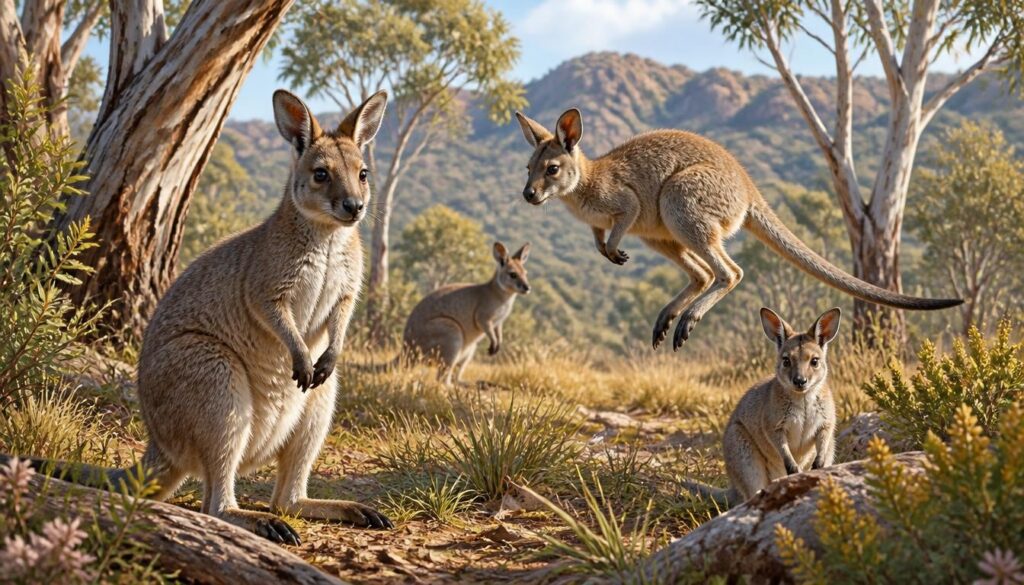
Wallabies look almost identical to kangaroos, but their smaller size can make them difficult to distinguish at first glance. Their size varies considerably between species. Some wallabies are no bigger than rabbits, while others can grow to nearly 2 meters from head to tail.
Their soft, fluffy fur can be brown, gray, reddish, or almost black. Like other marsupials, female wallabies have a pouch where they carry and nurse their newborn young. The inside of the pouch is often lighter in color.
One of their most noticeable features is their powerful hind legs. Just like their kangaroo relatives, wallabies use these legs to hop at high speeds and make impressive jumps. Their strong legs also serve as defensive weapons, allowing them to deliver powerful kicks when threatened by predators or other enemies.
When in danger, wallabies may thump their tails, kick with their hind legs, and make harsh sounds to warn other members of their group.
Their tails are another important part of their anatomy. Wallabies use them to maintain balance while hopping and to support their bodies when sitting. Males also use their tails to help deliver powerful blows during fights with rivals. These movements can also play a role in defending themselves against predators.
Their front limbs are much shorter than their hind legs and are mainly used for feeding rather than fighting. However, wallaby species can have different physical adaptations depending on their environments. For example, rock-wallabies have specially adapted feet that help them grip rocky surfaces, while other species lack this feature.
Read also: Strange-Looking Animals in Australia
Behavior
One of the most interesting things about wallabies is that they are generally crepuscular. This means they are most active around dawn and dusk.
During these active periods, wallabies often lead solitary lives and search for food on their own. However, they are sometimes seen feeding in groups of up to 50 individuals.
Wallabies come together during the breeding season, which takes place between January and February, according to the source article. After a gestation period of approximately 28 days, the female gives birth to a single tiny, underdeveloped joey.
The newborn then makes its way into its mother’s pouch, where it remains protected and continues developing. This process can take several months. Once the young wallaby is around one year old, it leaves the pouch permanently, although it may still jump back inside when it senses danger.
Diet and Habitat
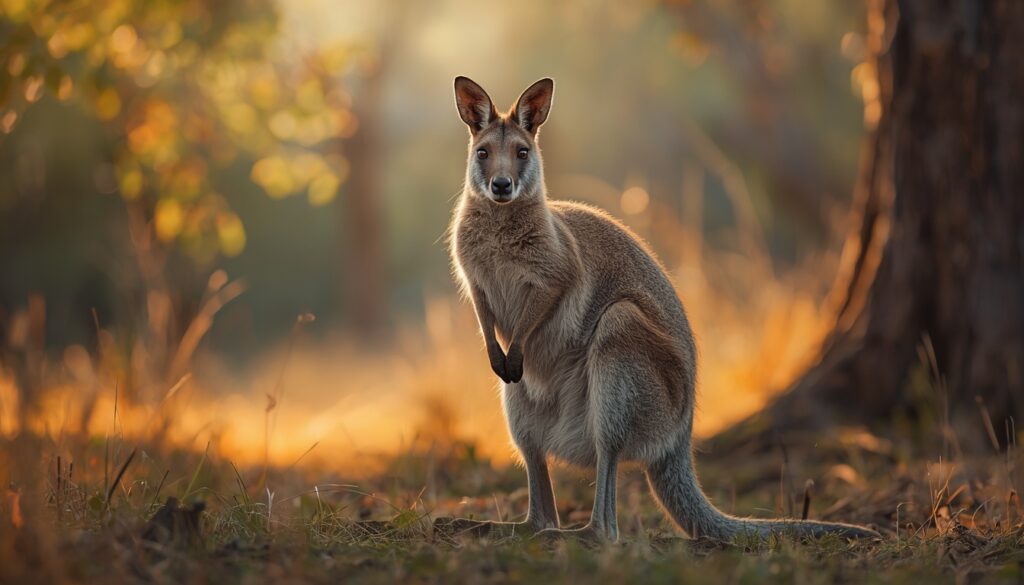
Despite their powerful bodies and strong legs, wallabies are herbivores. Their diet mainly consists of grasses, leaves, and sedges. Depending on the species and its habitat, they may also eat ferns and various types of fruit.
Their long jaws and large, flat teeth make chewing plant material relatively easy. Their elongated muzzles provide plenty of room for their teeth, allowing them to grind food efficiently and extract the nutrients they need.
Some species can survive in areas without nearby freshwater sources because they obtain moisture from the plants they eat.
Wallabies are native to Australia, where they are widely distributed. Many species live in heavily forested, remote, or difficult-to-reach areas. They are also found in New Guinea and nearby islands, although their populations there are smaller.
In addition to their natural range, wallabies have been introduced to other parts of the world, including New Zealand and the United Kingdom.
There are approximately 30 species of wallaby, and their preferred habitats vary depending on the species. Some favor forests and shrublands, while others are adapted to rocky landscapes, scrub, or wetlands.
These habitat preferences are reflected in the names of different groups, including brush wallabies and rock-wallabies.
Read also: Quokka – The Happiest-Looking Animal in the World
Predators and Threats
Although wallabies are fast and powerful, they still face a number of natural predators. These include dingoes, dogs, feral cats, foxes, and Tasmanian devils. Wedge-tailed eagles and other birds of prey can also threaten young wallabies.
Human activity creates additional risks. Encounters between wallabies and people can sometimes become violent, especially when the animals try to defend themselves by biting or kicking. Wallabies have also been hunted for their fur and meat, although this practice is less common than it once was.
The introduction of non-native livestock, including cattle, goats, and sheep, creates further competition for food and other resources.
However, habitat loss is one of the most serious threats to wallaby populations. European settlement and subsequent land development have led to the clearing of native vegetation for agriculture and livestock grazing. This has reduced the amount of suitable habitat available to many species.
Continued development also destroys the diversity of natural environments on which wallabies depend. Climate change adds further pressure, contributing to concerns about declining populations.
Of the approximately 30 wallaby species, several are considered threatened with extinction, while at least five are already extinct, according to the source article.