The Most Dangerous Animals in Africa
Africa is home to an extraordinary variety of wildlife, including some of the most powerful and potentially dangerous animals on the planet. Its vast savannas, rivers, forests, and wetlands provide habitats for species found nowhere else.
While many African animals avoid people whenever possible, encounters with wildlife can become extremely dangerous when animals feel threatened, surprised, or cornered. Here are some of Africa’s most dangerous animals and the reasons they deserve respect.
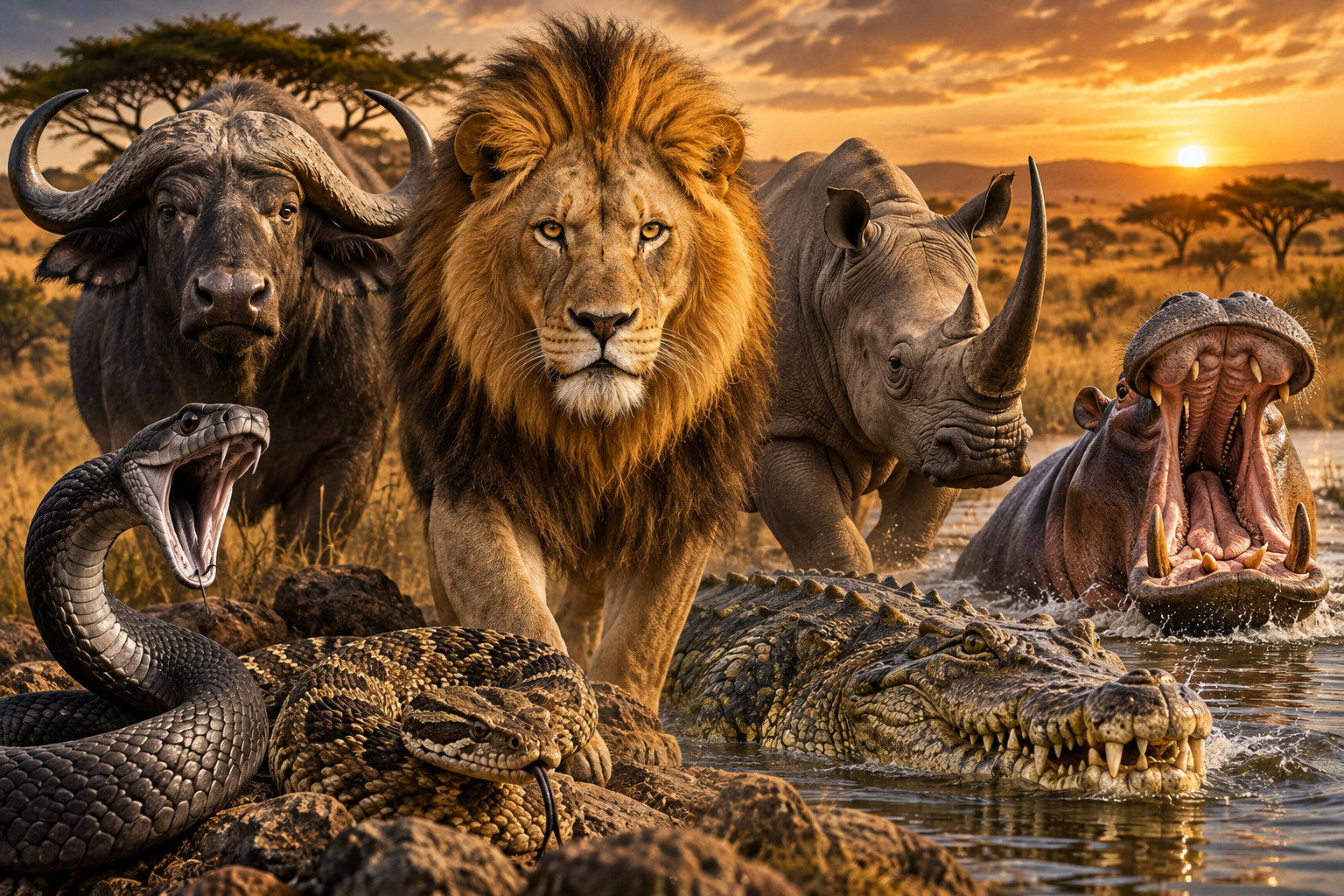
African Buffalo
African buffaloes live in herds that can range from small groups to hundreds of individuals. Although they are herbivores, that does not make them harmless. A buffalo can become extremely aggressive when threatened, injured, or protecting other members of the herd.
Their size and power make them capable of defending themselves even against large predators such as lions. For people, the safest approach is simple: never attempt to get close to a wild buffalo, especially on foot.
Related: Fascinating and Unusual Animals of Africa
African Lion
Females usually perform most of the hunting, often working together to capture large prey such as zebras, antelope, and wildebeest. Males typically play an important role in defending the pride and its territory.
Lions generally do not view humans as normal prey, but attacks can occur under certain circumstances. Encounters become particularly dangerous when a lion feels threatened, is defending cubs, or has become accustomed to human presence.
Their power, speed, and hunting abilities make lions animals that should always be observed from a safe distance.
African Rhinoceros
Both black and white rhinos can react aggressively when they feel threatened or startled. Despite their massive bodies, rhinos are capable of moving surprisingly quickly over short distances.
Human activity has also placed enormous pressure on rhino populations through habitat destruction and poaching. Their horns have made them targets for illegal wildlife trafficking, putting several rhino populations under serious conservation pressure.
For tourists and wildlife photographers, approaching a rhino for a closer photograph is never worth the risk. These powerful animals should be admired from a respectful distance.
Black Mamba
The black mamba is one of Africa’s most feared snakes. Known for its speed and highly potent venom, this species can be found in parts of eastern and southern Africa.
Despite its reputation, the black mamba usually prefers to escape rather than confront humans. However, if it feels trapped or seriously threatened, it can become highly defensive.
Black mambas inhabit a variety of environments, including savannas, rocky areas, and open woodlands. They may shelter in rock crevices, abandoned burrows, hollow trees, or termite mounds.
A venomous bite from a black mamba is a medical emergency. Anyone bitten by a suspected venomous snake should seek immediate professional medical treatment rather than attempting home remedies or traditional treatments.
Hippopotamus
These enormous herbivores spend much of the day in water and usually become more active at night. Despite their bulky appearance, hippos can move quickly both in water and on land.
They are particularly territorial around waterways and can react aggressively when they feel that their space is being invaded. Hippos have extremely powerful jaws and long canine teeth capable of causing catastrophic injuries.
Small boats can also be at risk if they approach too closely. A hippo may charge or collide with a boat, potentially overturning it.
The lesson is straightforward: seeing a hippo from a distance can be an unforgettable wildlife experience. Getting close to one can be extremely dangerous.
Nile Crocodile
These reptiles possess incredibly powerful jaws and are opportunistic predators capable of hunting a wide variety of animals.
Crocodiles are particularly dangerous because they can remain almost completely hidden in the water. An animal or person approaching the edge of a river may not realize a crocodile is nearby until it is too late.
Attacks are most likely in areas where people regularly use crocodile-inhabited waterways for fishing, washing, collecting water, or transportation.
When traveling in crocodile territory, local safety advice should always be taken seriously. Avoiding the water’s edge in known crocodile habitats is one of the most important precautions.
Puff Adder
Part of what makes the species dangerous is its excellent camouflage. A puff adder often remains motionless and relies on its natural coloring to blend into its surroundings. As a result, accidental encounters can occur when people step too close without noticing the snake.
When disturbed, puff adders may hiss loudly as a warning. However, if they feel threatened, they are capable of striking quickly.
Their venom can cause severe tissue damage and serious medical complications. A suspected puff adder bite requires urgent medical attention.
Final Thoughts
Africa’s wildlife is one of the continent’s greatest natural treasures, but powerful animals deserve space and respect.
The animals on this list are not dangerous because they are naturally “evil” or constantly hunting humans. Most conflicts occur when people enter an animal’s territory, surprise it, attempt to get too close, or ignore local wildlife safety advice.
The safest way to experience Africa’s incredible wildlife is to observe it responsibly, keep a respectful distance, and remember one simple rule:
The wild is not a zoo — and the animals always have the advantage.