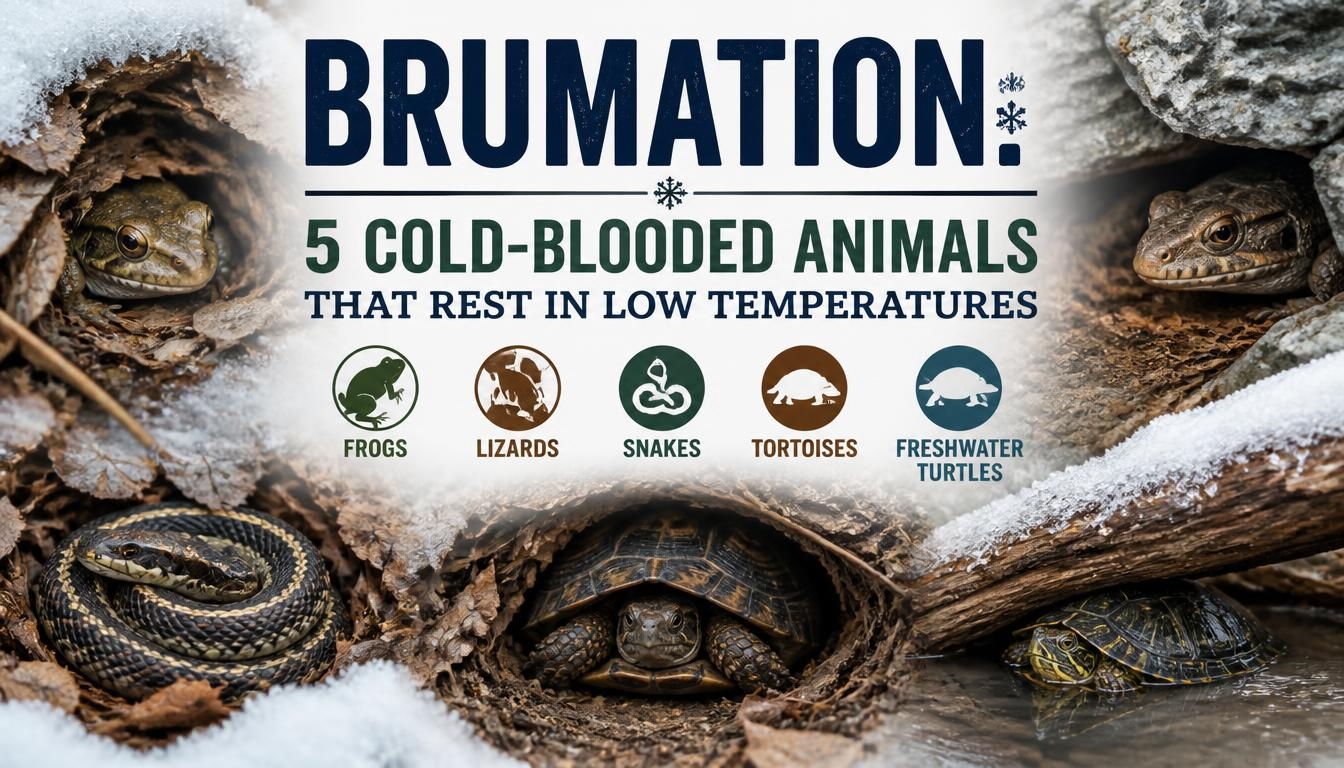
Brumation: 5 Cold-Blooded Animals That Rest in Low Temperatures
You have probably heard of activation and hibernation, but what about brumation? Like the first two, brumation is a state of inactivity that animals enter when temperatures drop. The difference is that brumation is a slowed-down state experienced by cold-blooded animals, particularly reptiles and some amphibians.
Because these animals are ectothermic, they rely on external sources of heat to regulate their body temperature. Brumation is essential to their survival because they cannot maintain a stable body temperature independently when seasonal weather conditions change.
Here is our list of five animals that become sluggish and rest when the weather turns cold.
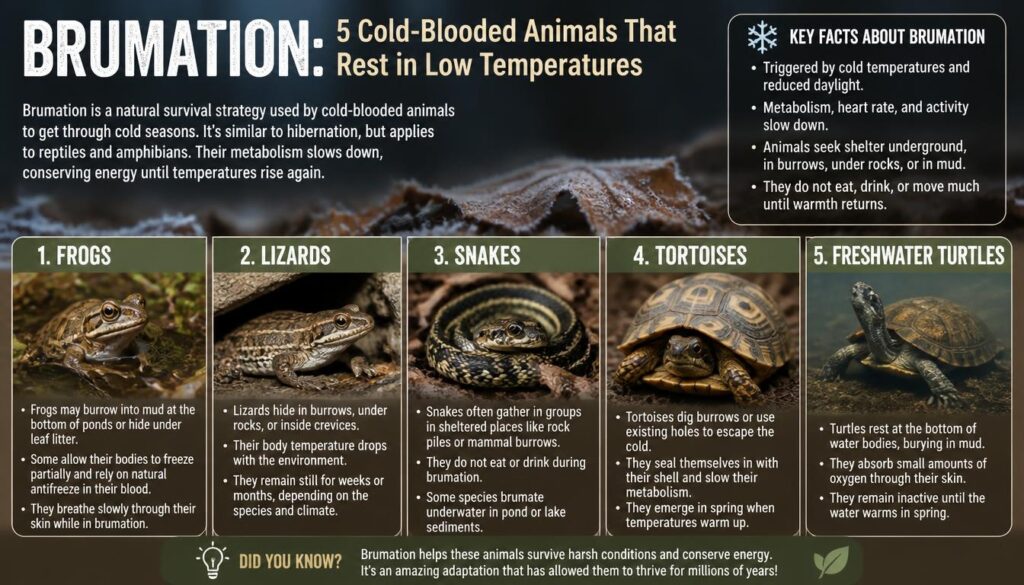
1. Frogs
Frogs are among the most adaptable animals, with several strategies for surviving challenging environmental conditions. One of these is brumation, which helps them endure harsh temperatures during winter.
This is one reason frogs can live in such a wide range of environments, from areas near the Arctic Circle to deserts and many places in between. Much like animals that hibernate, frogs enter a dormant state and seek shelter underground or in other protected places. They may hide in burrows, rock crevices, or other spaces where they can remain relatively safe and warm throughout winter.
Some frog species burrow deep into the mud when temperatures fall. During brumation, their body temperature, heart rate, and breathing rate decrease significantly.
So, what is the difference between brumation and hibernation in animals? Animals that hibernate enter a deep state of sleep and generally do not move around or search for food during winter. Cold-blooded animals, however, may become active on warmer days while brumating, sometimes moving around to find water.
Dehydration can be dangerous for animals in brumation, which is why they cannot always remain inactive throughout the entire winter. This also explains why cold-blooded animals may temporarily interrupt their dormant state to drink water or find sunny spots where they can warm themselves.
Many frog species can withstand freezing temperatures as low as -4°C. Even more impressive, wood frogs, the only frog species found north of the Arctic Circle, can freeze almost completely and later come back to life.
You may also like: Blood Feeders: 8 Animals That Drink Blood for Food
2. Lizards
Many first-time lizard owners become concerned when they notice their pets becoming unusually inactive. They may not realize that brumation is a natural behavior in many reptiles.
Lizards such as bearded dragons, geckos, and numerous other species are among the animals that slow down when temperatures fall. Their bodies become less active, and they may go for weeks without defecating, drinking, eating, or moving around.
Some species also bury themselves completely underground or retreat to the darkest and coolest areas of their surroundings. During this period, they may barely respond to ordinary stimuli, such as being touched or nudged.
Lizards brumate to avoid cold temperatures and periods when food and water become scarce in their habitats. What makes this behavior particularly interesting is that different reptiles have their own ways of going through brumation.
Bearded dragons are a good example because their behavior can be unpredictable. Some may brumate every year for an extended period during the season, while others may never do so at all.
Why do pet lizards brumate? Even when they live in comfortable conditions and have no obvious reason to enter this state, the behavior is part of their natural instincts. Their bodies can follow this seasonal pattern regardless of whether they are living in the wild or in captivity.
Brumation is a natural process and is generally considered safe for healthy reptiles.
3. Snakes
Snakes do not follow a fixed schedule when it comes to brumation. Instead, they respond to changes in their surroundings. They can detect the approach of winter through environmental signals such as atmospheric pressure, temperature changes, humidity, and other conditions.
During winter brumation, snakes move to warmer or more sheltered locations. In the wild, they may use dens originally created by other animals, hide in caves, deep crevices, or hollow tree stumps.
Snakes living in cities and suburban areas may seek shelter in places such as barn basements, boiler rooms, and even vehicle engines. Because they will enter almost any suitable warm space, some venomous species can pose a potential danger to people during colder months.
Before winter arrives, snakes often eat more food to build up fat reserves and increase their glycogen stores. Glycogen is a form of stored sugar that provides energy for their muscles, which they rely on to survive.
Their fat reserves are also important for mating, reproduction, and supporting egg development.
Like other animals that brumate, snakes may take advantage of mild weather to become temporarily active. They usually do not travel far from their shelter, but may come out to warm themselves in the sun or drink water.
Afterward, they return to their reduced metabolic state and remain relatively inactive until spring brings warmer temperatures and renewed activity.
4. Tortoises
Tortoises can sense that winter is approaching when cold autumn nights begin to set in. These changing conditions trigger preparations for brumation.
Many tortoise species enter a dormant state to cope with unfavorable conditions and low temperatures. During the coldest part of the year, their bodies cannot maintain the optimal temperature needed for digestion, so they become much less active.
By remaining inactive, tortoises reduce the amount of weight they might otherwise lose during winter. During brumation, they rest in sheltered areas and conserve energy by limiting their activity.
However, they may still emerge from their burrows occasionally to warm themselves in the sun or drink water from nearby puddles.
Not all tortoises can safely go through brumation. For some species, this period can be particularly dangerous in the wild. Severe frost, flooding, and attacks by rodents can become fatal threats when tortoises are inactive and less able to protect themselves.
5. Freshwater Turtles
Do freshwater turtles brumate underwater? Yes, they do. During winter, some freshwater turtles settle at the bottom of ponds, where the water remains above freezing even when ice forms on the surface.
They can survive these conditions thanks to a remarkable ability: absorbing oxygen through their cloaca, an opening at the rear of the body.
Like other cold-blooded animals, a turtle’s body temperature changes with the temperature of its surroundings. In cold water, its metabolism slows down, increasing its chances of surviving the winter.
The colder the water becomes, the slower the turtle’s metabolism gets. This reduces its energy requirements and the amount of oxygen it needs.
Freshwater turtles brumate in lakes and ponds because water temperatures in these environments can remain relatively stable throughout winter. Remaining underwater also allows them to maintain a more consistent body temperature.
During this period, turtles rely on stored energy and absorb oxygen from the surrounding water. This unusual adaptation allows them to obtain enough oxygen to meet their greatly reduced needs without relying entirely on their lungs.
Painted turtles and snapping turtles can tolerate challenging periods of low oxygen for up to 100 days. However, not all turtle species can survive freezing conditions.
For example, adult box turtles cannot survive when ice crystals form inside their bodies during freezing weather.