
Bat-Eared Fox: The Only Surviving Species of the Genus Otocyon
The bat-eared fox (Otocyon megalotis) is an unusual member of the canine family. Although its adorable appearance might make it seem like an exotic pet, this article is about the animals living freely in the wild. There is considerably more to this African species than its oversized ears and appealing face.
From its specialized teeth to its distinctive family life, the bat-eared fox has several characteristics that set it apart from other foxes. Here are some interesting facts about this remarkable animal.
Appearance
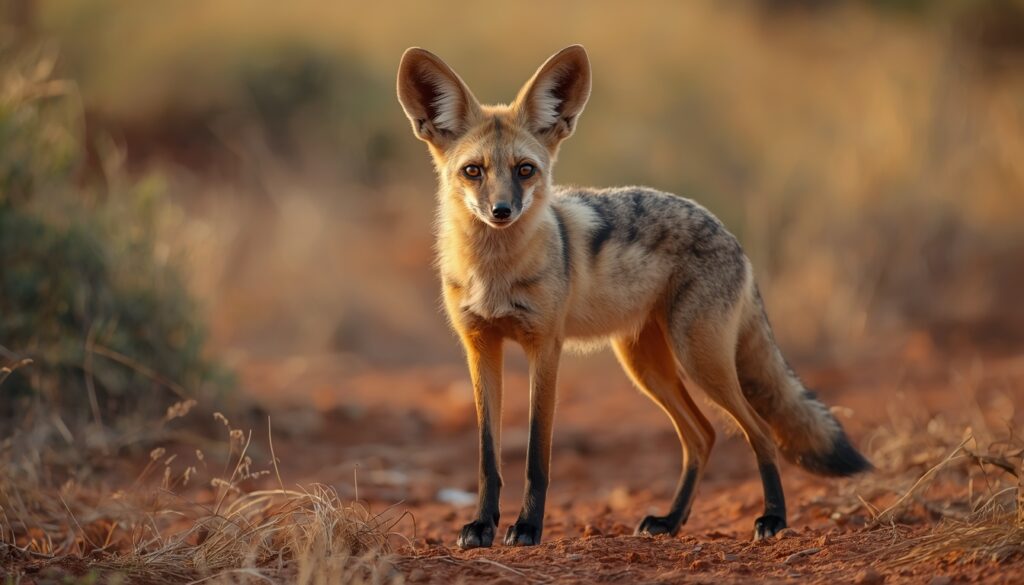
The bat-eared fox is best known for its exceptionally large ears, which can reach approximately 13 centimeters in length. These prominent features give the animal an excellent sense of hearing, allowing it to detect potential danger and locate prey. The ears also contain numerous tiny blood vessels that help release heat and keep the fox cool during hot weather.
Its coat is generally sandy gray, with lighter fur covering the underside of the body. Dark markings appear behind the ears, around the eyes, across the muzzle and legs, and at the tip of its bushy tail.
That long, dark tail serves a practical purpose as well. When the fox is moving quickly, it helps the animal maintain balance and change direction during sudden turns. Although this adaptation makes it agile, it does not guarantee that the fox can outrun every predator.
Another unusual feature is its dentition. Bat-eared foxes have between 46 and 50 teeth, more than most mammals. Other members of the dog family typically have two upper and three lower molars on each side of the mouth. The bat-eared fox, by comparison, has three upper and four lower molars on each side.
Its lower jaw is elongated and particularly flexible, making it easier to collect large numbers of insects. A specialized digastric muscle allows the fox to open and close its jaws as many as five times per second. Its small teeth are also exceptionally sharp, helping it break down food quickly and efficiently.
You may also like: Animal Trade: 7 Exotic Animals Hunted for Their Skin and Fur
Behavior
Bat-eared foxes are social animals that usually live as couples or in small groups of two to five individuals. A male and female generally form the core of a family, and although they may remain paired for life, the species is also described as polygamous. A male may take another long-term mate after a year or two, and an expanding family may eventually include a third partner.
Much of the day is spent resting. The animals become more active around dusk, when they gather to play and groom one another. Their family responsibilities are particularly interesting: males take an active role in caring for the young, including babysitting, grooming, playing with, and raising the pups. Meanwhile, females go out to hunt.
As nocturnal foragers, bat-eared foxes search for food throughout the night. They typically begin hunting after sunset, take a break around midnight, and resume their search until dawn.
While looking for prey, a fox moves slowly with its nose close to the ground and its ears alert. Once it detects insects, it may dig rapidly or leap to catch them, crushing its prey where it finds it. A single animal can cover as much as 12 kilometers in one night while searching for food.
Unlike many other canids, bat-eared foxes are not territorial. Their home ranges can overlap considerably, meaning several groups may use the same area without this being unusual.
Communication relies heavily on body language, particularly movements of the ears and tail. These foxes also have nine different vocal calls. Seven are low-pitched sounds used when interacting within a group, while a variety of softer whistles are part of their communication repertoire.
Diet and Habitat
Insects make up the majority of the bat-eared fox’s diet, accounting for as much as 70% of its food intake. Its menu includes dung beetles and their larvae, grasshoppers, millipedes, scorpions, and spiders. Ants and harvester termites are among its preferred foods.
The fox is not exclusively insectivorous, however. It also eats eggs, fruit, lizards, rodents, and other small mammals. Its exceptional hearing helps it locate even beetle larvae hidden beneath the soil. Depending on the season, mice may become a more important part of its diet during both dry and rainy periods.
Bat-eared foxes rarely need to drink water directly because much of the moisture they require comes from their food.
The species is native to Africa and inhabits the eastern and southern parts of the continent. Its preferred environments include dry scrubland with short grass and open savannas. It can also be found in arid and semi-arid habitats, particularly in places with patches of bare ground.
These foxes use their strong, sharp claws to dig underground dens. They sometimes take over abandoned termite mounds, enlarging them to suit their needs. A family may maintain several dens, each containing multiple chambers, entrances, and connecting tunnels.
They are often found in areas where livestock and wild hoofed animals graze. When danger approaches, bat-eared foxes may escape into tall grass or dense vegetation to find cover.
Predators and Threats
Despite their agility and ability to detect danger, bat-eared foxes face threats from a wide range of predators. Their natural enemies include cheetahs, eagles, hyenas, jackals, leopards, lions, and African wild dogs.
Young foxes are especially vulnerable. Smaller predators, including black-backed jackals and martial eagles, may prey on pups. Adults and juveniles alike can be caught by larger predators because of their relatively small size. Birds of prey can also attack them from above, which is one reason their nighttime activity is advantageous.
Human activity presents additional challenges. In Botswana, some local communities hunt bat-eared foxes for their fur. Farmers may also kill them because they are regarded as pests or believed to pose a threat to young livestock. Poison and traps used by people can cause further deaths.
Disease is another concern. Canine distemper, canine parvovirus, and rabies are among the illnesses that threaten these animals.
Finally, drought and the destruction of natural habitat put further pressure on bat-eared fox populations. Together, these dangers make survival increasingly difficult for a species whose unusual adaptations are closely tied to its environment.
The bat-eared fox is far more than an African canid with oversized ears. Its remarkable hearing, specialized teeth, insect-focused diet, and cooperative family behavior make it a distinctive species. Yet, like many wild animals, it must contend with predators, disease, habitat loss, and human activity.