Marine Iguana: The Remarkable Sea-Dwelling Reptile of the Galápagos Islands
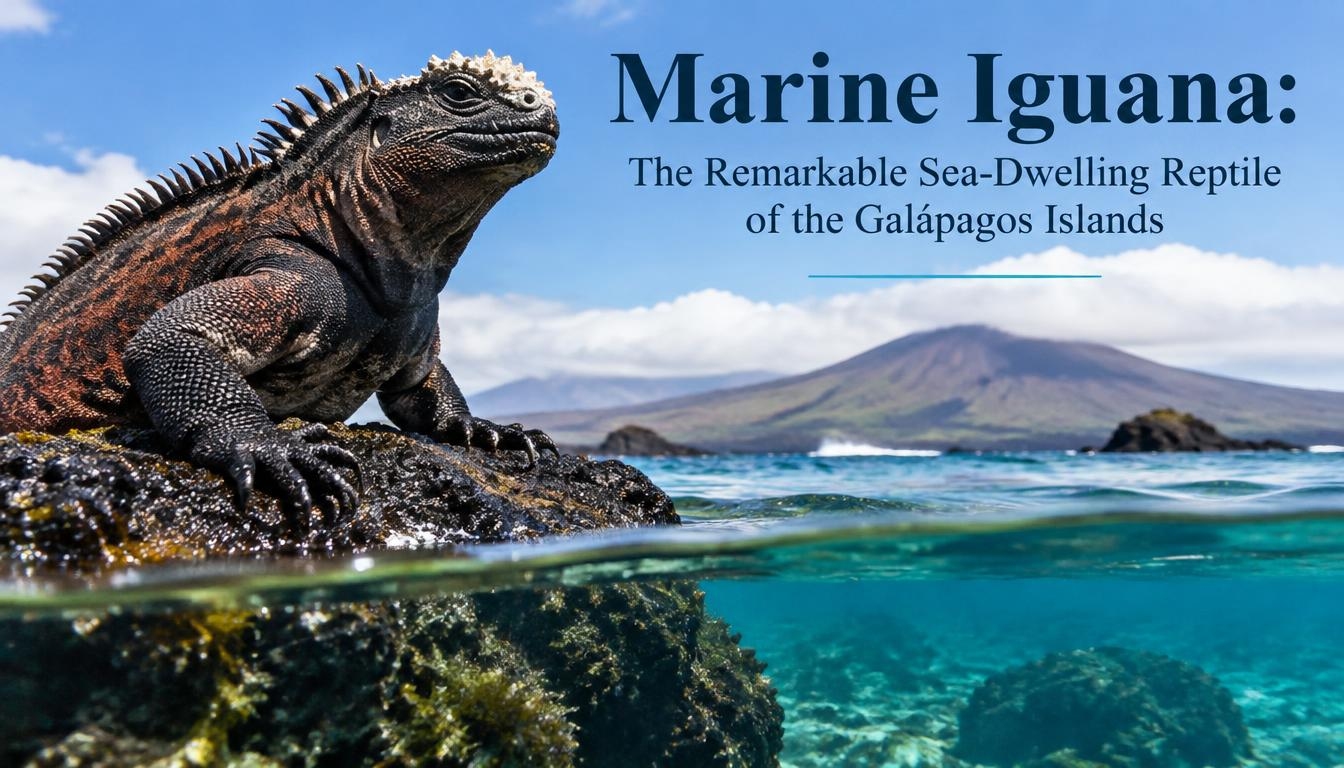
The marine iguana is one of the most unusual reptiles on the planet. When swimming beneath the surface, it can look almost like a miniature sea dragon searching the ocean floor for food. Yet its extraordinary appearance is only part of what makes this species so interesting. Its physical features, feeding habits, and behavior reveal just how specialized life in the Galápagos Islands can become.
From its ability to dive underwater to its unusual way of getting rid of excess salt, the marine iguana has developed a range of adaptations that distinguish it from other lizards. Here are some fascinating facts about this remarkable reptile.
Appearance
One of the first things people notice about marine iguanas is their distinctive appearance. They have prominent eyes, spiny scales running along their backs and tails, and powerful claws. Most individuals have dark gray skin, a coloration that helps them absorb sunlight after returning from the cold ocean.
However, marine iguanas do not look exactly the same across the Galápagos Islands. Their size, shape, and coloration vary between island populations. Their colors can also change throughout the year.
During the breeding season, which runs from January through April, some marine iguanas develop striking shades of green, orange, pink, red, and turquoise. The animals found on Española Island are particularly famous for their colorful appearance and are sometimes nicknamed Christmas marine iguanas. These vivid colors play a role in attracting potential mates. Once the breeding season ends, the animals generally return to darker gray and black tones.
Their claws are long and sharp, allowing them to hold firmly onto coastal rocks and underwater surfaces, even when strong currents are present. Their flattened tails act like paddles, helping them move efficiently through the water.
Another useful adaptation is their blunt snout. Its shape makes it easier for the iguana to feed on algae growing underwater. Sharp teeth allow it to scrape tough algae from rocks without difficulty.
Marine iguanas also differ in size depending on the island they inhabit and the amount of food available in their surroundings. Some individuals can reach approximately 1.5 meters in length.
You may also like: Natural Snake Repellents: Plants That Keep Snakes Away and Beautify Your Space
Behavior
Marine iguanas are capable divers, with some reaching depths of up to 20 meters while searching for food. They usually spend only a few minutes feeding underwater, although a dive can last as long as 30 minutes.
Can they breathe underwater? No. Like other reptiles, marine iguanas must return to the surface for air. Instead, they rely on their ability to hold their breath for extended periods. When necessary, they can remain underwater for up to 60 minutes.
Another unusual feature is their specialized salt glands. These glands allow marine iguanas to remove excess salt from their bodies by sneezing it out. Because they feed in seawater, they regularly take in large amounts of salt. Their bodies need to eliminate this excess without losing too much water, helping them avoid dehydration. The expelled salt often leaves visible white deposits around their heads and necks.
Although they spend time in the ocean, marine iguanas are land-dwelling animals when it comes to resting and nesting. Much of their day is devoted to basking on dark volcanic rocks, where they absorb warmth from the sun. After swimming in cold water, they sometimes gather in large groups to warm up together.
Male marine iguanas can be quite theatrical when competing for territory. Two rivals may face each other and repeatedly nod their heads in exaggerated movements. The confrontation can then develop into pushing and head-butting until one animal gives way.
These reptiles generally conserve energy and do not rely on biting during territorial disputes. They are not considered aggressive toward people, and there have been no recorded attacks on humans in the source material.
Diet and Habitat
Despite their somewhat intimidating appearance, marine iguanas are peaceful herbivores. Their diet consists mainly of marine algae found along rocky shores and beneath the water’s surface.
They are particularly well adapted to feeding in shallow coastal waters. While searching for algae, they swim with smooth, snake-like movements, moving through the water in pursuit of their plant-based food.
One of their most unusual abilities becomes apparent during El Niño events, part of the El Niño–Southern Oscillation climate pattern. These events involve warmer ocean waters, weakened trade winds, and increased rainfall. They can also reduce the availability of the algae that marine iguanas depend on.
When food becomes scarce, marine iguanas can actually shrink in body size. Their bones become smaller and their skeleton contracts, allowing them to reduce their overall size by as much as 20% of their body mass. This adaptation helps them cope with limited food supplies by reducing the amount of energy they need.
Once algae become more abundant again, the iguanas can regain their previous size.
Marine iguanas are unique among lizards because they regularly forage in the ocean. They are found only in the Galápagos Islands, where their bodies and behavior reflect a long history of adaptation to island life.
Their habitat includes rocky shorelines and areas close to shallow reefs, where they can easily enter the water to feed. They also need sandy ground in which to dig burrows, while dark volcanic lava provides useful places to rest and warm themselves during the day.
Different islands support their own marine iguana subspecies, a result of populations remaining isolated from one another over long periods.
Predators and Threats
Marine iguanas face different dangers at various stages of their lives. Hatchlings are especially vulnerable to natural predators, with hawks and snakes among the most common threats.
On Fernandina Island, young iguanas face particularly difficult conditions because of the large snake population. These predators wait for hatchlings to emerge, and many young reptiles do not survive their first encounters with them.
Adult marine iguanas also have to watch out for hawks, although some individuals can successfully escape these birds.
Human activity and introduced species create additional risks. Although marine iguanas are legally protected throughout the Galápagos Islands, this protection does not eliminate all threats to their populations.
Invasive animals can endanger certain island subspecies. Cats, dogs, pigs, and humans may also attack eggs and young iguanas, further affecting their survival.
The source estimates that between 200,000 and 300,000 marine iguanas live across the Galápagos Islands, while also reporting that their overall numbers continue to decline.
The marine iguana is an extraordinary example of adaptation to a demanding environment. Its ability to swim and feed underwater, remove excess salt, and adjust its body size when food becomes scarce makes it unlike almost any other lizard. Found only in the Galápagos Islands, this remarkable reptile remains one of the most distinctive animals of the archipelago.